
11 Simple Ways to Add Variety to Your Strength-Training Routine
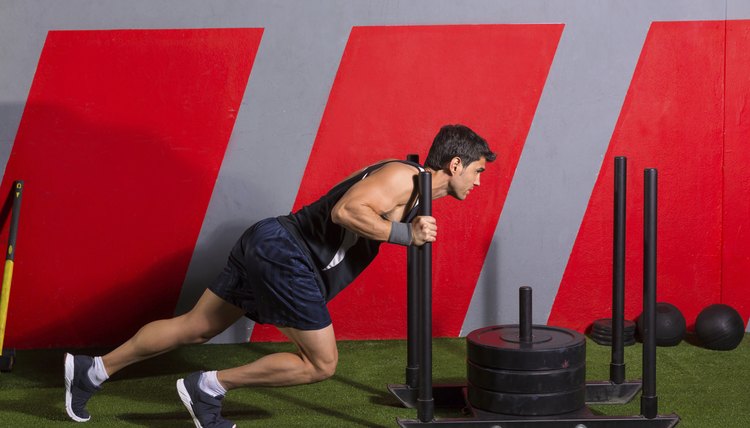
Repetition is the key to mastery -- mastering movement, mastering nutrition and mastering everyday healthy habits. But quite frequently, repetition also results in boredom -- and when you get bored, you lose motivation. You can break this vicious cycle, however, by using the same basic movements that are already in your training plan, but with minor variations. The variations should be small enough that the movement is effectively the same as before, but large enough that you feel as though you're doing a new exercise. While not every variation is appropriate for everyone, the following ways to vary an exercise should help you when you are looking to switch up your workout but keep your goals the same.
1. Utilize Different Sets, Reps and Intensity
One of the most common ways to vary an exercise is to change the number of sets and reps (five sets of six reps versus three sets of eight reps) or the amount of resistance used (85 percent max versus 80 percent). As Mel Siff, Ph.D., explains in his book “Supertraining,” if you are focusing on building strength, aim for five or fewer reps at 80 percent to 90 percent intensity, and if you’re bulking up, your goals should be eight or more reps with a resistance of 60 percent to 80 percent. While this does force your muscles to grow and adapt, after a couple phases of only changing sets, reps and intensity, you may begin to feel bored. Start by varying the sets, reps and intensity, but plan to change it up more after a couple of phases.

LUNAMARINA/iStock/Getty Images
2. Try Variable Reps
Not all sets have to be the same. Wave loading -- changing the amount of weight you use in each set -- is a great way to experiment with this. With this method, you could program squats for three sets as follows: set 1 for four reps, set 2 for two reps (wave 1), set 3 for four reps and set 4 for two reps (wave 2), using progressively more weight on each set. You can also try a pyramid scheme in which you program three sets of squats (or any exercise) and perform as follows: set 1 for eight reps, set 2 for six reps and set 3 for four reps, going from a lower resistance to a higher resistance.
LUNAMARINA/iStock/Getty Images
3. Use Time Instead of Reps
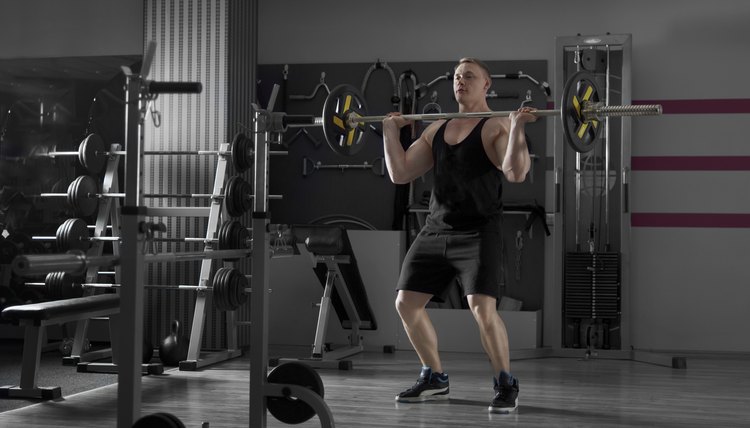
Constantly counting reps can be monotonous, so try setting a time limit and do as many reps as safely possible instead. For example, instead of completing eight front squats, complete 40 seconds of that exercise. If you utilize a tempo (more on this in a following slide) -- such as three seconds for the eccentric movement, no pause and a two-second concentric -- you can manipulate the set so you still complete the desired number of reps, but since you’re going for time, it feels different. Just make sure you are using a resistance that is appropriate for the time you program -- not so heavy that you max out after 40 seconds, but not so light you could go for 80 seconds.

LUNAMARINA/iStock/Getty Images
4. Change Your Range of Motion
One of the easiest ways to vary an exercise is to change your range of motion. But you must be careful that you don’t alter it so drastically that you place yourself at risk of injury (not everyone should squat all the way to the ground). If you are fit to do so, taking a parallel squat to one that is a bit deeper (and maybe to a box) will add enormous variety and a new stimulus to the movement as different muscles are activated in new ways throughout their ranges of motion. But again, there must not be any contraindications or injury that is exacerbated by a greater range of motion or a structurally blocked joint such as a hip. And if you are a beginner not yet capable of achieving a greater range of motion without compromising form, stick to one of the other options for variety. Another way to change the range of motion is to complete partial reps or add another half rep. Sticking with the squat, complete one full rep then immediately complete another half rep. That counts as one rep towards your total.

LUNAMARINA/iStock/Getty Images
5. Alter Your Hand or Foot Position
Like a larger range of motion, altering foot or hand positions (or grip) can activate different muscles. Staying with the squat example, you can perform normal-stance, sumo-stance or offset-stance squats. All are squats, but all are slightly different because they change the base of support, angle of your joints and core-muscle demand. You can do the same with the bench press, alternating between a normal-width grip, a close grip or a wide grip. Again, the pressing movement stays the same, but the grip changes whether you are activating more pectoral or more arm muscles.
LUNAMARINA/iStock/Getty Images
6. Speed Up the Tempo
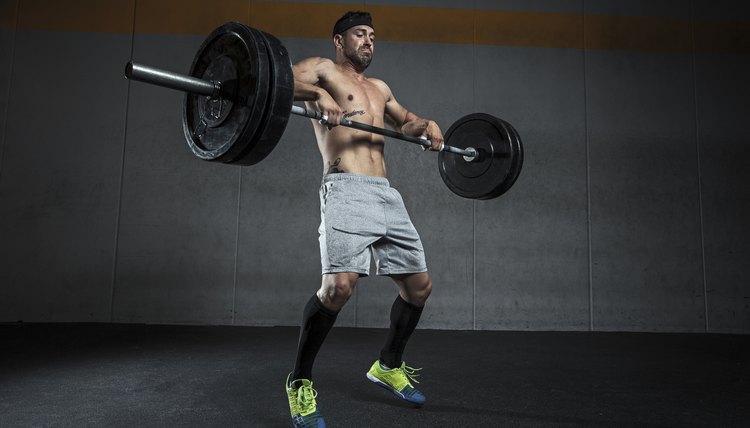
Tempo is the speed of your movements, and by going faster or slower or using isometrics, you create new stimuli, both physically and mentally. Once you’re proficient with your movements, you should work on making them as explosive as possible. Whether or not the movement is actually quicker will be determined by the resistance you’re using, but trying to move the weight as quickly as possible is a great way to progress your training. You can also try making the movement slower and more controlled if your goal is hypertrophy (muscle growth) because the more time under tension, especially in the lowering phase, the greater the gain.
LUNAMARINA/iStock/Getty Images
7. Go With Offset Loading
For exercises that are traditionally completed with the resistance loaded equally on both sides (dumbbell lunges, dumbbell step-ups, farmers walks, etc.), you can vary the exercise by holding the resistance only on one side. Not only will this create more of a core demand and stability challenge, but it also forces you to focus on the movement and maintaining proper form and balance. As always, you should be familiar with the movement before progressing to ensure your safety and prevent injury.

LUNAMARINA/iStock/Getty Images
8. Vary the Position of Resistance
Changing the position of the resistance relative to your center of gravity provides variety as well as a progression (or digression in the case of an exercise that is too advanced and can’t be controlled). The further the resistance is from your center of gravity, the more core work and stability is required to complete the movement. For example, for a dumbbell reverse lunge, instead of holding the weight at your side, hold a dumbbell in a goblet grip or in the racked position (a dumbbell on each shoulder).

LUNAMARINA/iStock/Getty Images
9. Try Different Resistance Implements
It may seem obvious, but many trainees overlook changing the implement providing the resistance. Again, this works for almost any exercise. For example, when performing a reverse lunge, you can go from using dumbbells to a barbell to a cable to a sandbag. You’re keeping the movements the same, but switching your equipment changes how your muscles have to support the weight because different implements require different grips or holding positions (such as a sandbag versus a barbell).

LUNAMARINA/iStock/Getty Images
10. Switch from Bilateral to Unilateral
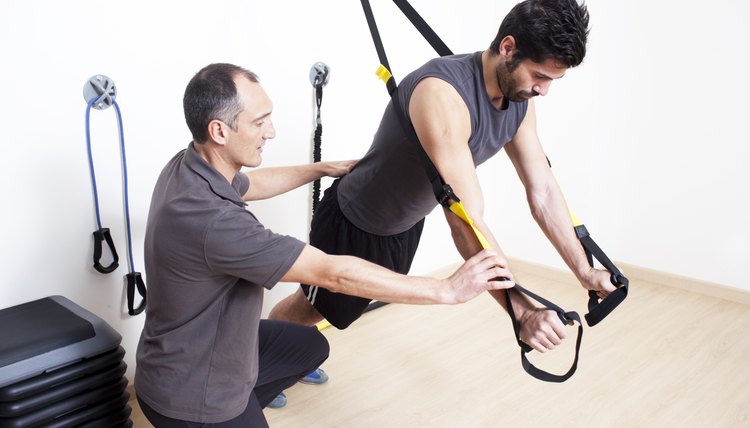
Similar to offset loading, you can go from using two feet or two hands to using one (anytime you are utilizing unilateral loading, it’s an offset load). For example, when doing an inverted row (TRX Row or Jungle Gym Row), start by planting both feet then progress to balancing on one foot at a time through the entire range of motion. And if you are doing a cable row, go from using two hands to one hand (or vice versa).

LUNAMARINA/iStock/Getty Images
11. Work in Some Intensity Boosts
Adding intensity boosts can allow the athlete to use heavier weight for the same number of repetitions, prolong the set and create a pump far beyond what is usually experienced with classic sets. But this option should be utilized sparingly and is best used with only one set per exercise (usually the last one).
Examples of intensity boosts include: • Rest-Pause Sets: Use a weight 85 percent to 95 percent of your rep max weight to do one rep with 30 to 45 seconds of rest in between. Do this for 6 to 10 sets. • Drop Sets (Resistance): Once you complete a set of an exercise to near muscular failure (one rep left in the tank), reduce the resistance used and complete as many reps as possible with the lighter resistance. • Drop Sets (Mechanical Advantage): By changing the angle or position of an exercise, you can reduce the intensity, allowing you to complete more reps at the new position. For example, start a set of TRX Rows as low as possible and complete as many as possible. Then immediately bring yourself a bit off the floor (reducing the difficulty) and complete as many more reps as possible. • Iso-Hold Finishes: Try completing a set of an exercise and, on the last rep, hold the most challenging position until muscular failure. You will only want to use this with body-weight exercises or those in which the resistance being used can safely be removed after failure. For example, you can hold the bottom position of a push-up for as long as possible on the last rep, but you would not want to hold the bottom of the last rep of a back squat because you will likely not be able to return and safely rack the barbell.
LUNAMARINA/iStock/Getty Images
The Wrap-Up
Each of these slight variations of movements, form and resistance will keep you progressing towards your goals and steering clear of boredom, which is a killer of exercise adherence. But just as devastating as boredom, completely switching up exercises before you’ve mastered them will leave you spinning your progress wheels. The next time you find yourself getting bored with an exercise, give one of these variations a try. Have fun, beat boredom and welcome the results!

LUNAMARINA/iStock/Getty Images
What Do YOU Think?
Have you ever hit a wall of boredom in your training? How did you break through it? What have you tried to add or change about your workout to make it more interesting?

LUNAMARINA/iStock/Getty Images
Explore In Depth
References
Writer Bio
Kyle Arsenault is a performance coach, author and former intern of the renown Cressey Performance. Now working with Momentum PT, he specializes in combining principles of physical therapy with strength and conditioning to enhance overall performance for his competitive athletes as well as his general population athletes.