

What Chemicals Are in Clorox Wipes?
Table of Contents
The Clorox Co. produces a number of chemically filled products, including Clorox disinfecting wipes. The wipes are marketed to be convenient; they are stored in a handy pull out-disposable container. They can be purchased in a variety of scents and decors. The Clorox Co.
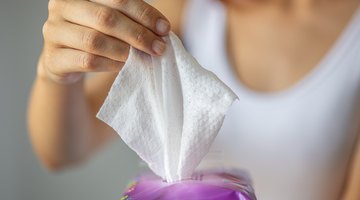
claims that these wipes can be used anywhere to clean, disinfect, and kill 99.9 percent of germs, including viruses that cause the common cold and flu.
Ingredients List
The ingredients listed in Clorox wipes fresh scent version, beginning with the highest amount, are water, substrate, isopropyl alcohol, and alkyl dimethyl benzyl ammonium chloride. Other ingredients include alkyl dimethyl ethylbenzyl ammonium chloride, alkyl polyglucoside, disodium EDTA, fragrance, preservative, and propylene glycol propyl ether.
If you are not a scientist, you may not be able to pronounce these ingredients or define what they are and what they can do to your body. Substrate is the cotton fabric that is used to hold the chemicals onto the wipes.
Isopropyl Alcohol
Isopropyl alcohol is defined by Wikipedia as a common name for a colorless, flammable chemical compound with a strong odor. It has the molecular formula C3H7OH and is the simplest example of a secondary alcohol, where the alcohol carbon is attached to two other carbons.
The MSDS sheet (see link below) states that isopropyl alcohol may be harmful if inhaled, ingested, or absorbed by the skin and may act as an irritant.
Alkyl Dimethyl Benzyl Ammonium Chloride
Alkyl dimethyl benzyl ammonium chloride is also known as benzalkonium chloride. This chemical, when researched by the chemistry department at the University of Akron (see link below), was found to be an agricultural pesticide. This very soluble formula, C24H42IN, is a class-three poison. Side effects are noticed with ingestion, inhalation, and skin contact.
Alkyl Polyglucoside
Alkyl polyglucoside is defined by Organixsouth (see link below) as a mild surfactant base derived from a reaction involving cornstarch, glucose, and a natural fatty alcohol (decyl polyglucose).
The next three ingredients are disodium EDTA (salt), fragrance, and a preservative.
Propylene Glycol Propyl Ether
The last ingredient listed is a clear liquid used to clean products as a solvent or coupling agent for hard surface cleaners, water-reducible aerosol paint formulations, and grease or paint removers, according to Chemicalland21 (see link below).
Health Effects
According to the U.S. Department of Health and Human Services' household products database, there are three acute health effects that can be caused by Clorox disinfecting wipes.
The first is eye contact, which can cause moderate eye irritation. If the product comes into contact with your eyes, you should flush your eyes with plenty of water. If the irritation continues, go to a physician immediately.
The second is skin contact. With prolonged skin contact minor irritation may occur; wash the area thoroughly with soap and water.
The last concern is ingestion. However, the product is practically nontoxic if ingestion occurs.
Prevention/Solution
While most chemicals cause some type of reaction if swallowed, inhaled or touched, many companies are now producing organic or "green" cleaning products that contain a low amount of chemicals if any at all.
The Clorox Co. (see link below) recently introduced a line called "green works." This line includes wipes, which are created from plant fibers and, according to Clorox, cleans without leaving harsh chemical residues.
References
Resources
Writer Bio
This article was written by the CareerTrend team, copy edited and fact checked through a multi-point auditing system, in efforts to ensure our readers only receive the best information. To submit your questions or ideas, or to simply learn more about CareerTrend, contact us [here](http://careertrend.com/about-us).
More Articles

