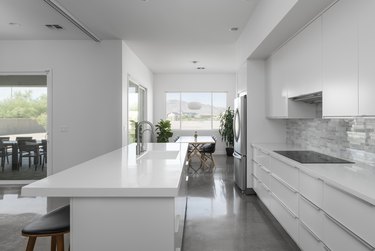
Laminate can become dull over time from all the chopping, slicing, sliding and dropping that occurs in a bustling work space. It may be an enticing endeavor to completely remove and replace dull laminate countertops, but knocking out an otherwise structurally sound surface for more exciting granite or stone material can be expensive and time consuming.
Spending the time to resurface laminate countertops to look like granite can transform a space with minimal effort and expense. From painting countertops with Rust-Oleum to painting countertops to look like granite with a kit, there are many ways to get the job done and transform the space.
Video of the Day
Video of the Day
Benefits of Look-Alike Granite Countertops
Painting laminate to look like granite can hide imperfections in the surface of the countertop. The variegated pattern of the painted granite can also hide small imperfections in the painter's work, which can take some of the stress off finishing the project perfectly. The granite look works well with nearly any décor style, according to Architypes. It can highlight a bland bank of oak kitchen or bathroom cabinets and add depth, texture and warmth to the living space.
Prepare the Countertop
Clear the clutter from the countertop and surrounding work areas. Prepping a laminate surface to paint can create a lot of dust that can land on clean surfaces or create issues with small countertop appliances.
Before sanding, take the time to clean the countertop with a degreaser or a mix of about 1 tablespoon of mild dish soap to 4 cups of warm water. A mix of one part vinegar and two parts warm water can also remove layers of dust and grease that can collect on the surface of the laminate countertop. Thoroughly wipe down the entire surface of the countertop and allow it to dry completely.
Pay close attention to corners and the edges of the countertop. Use a toothbrush or narrow scrub brush for bottle cleaning to get into the recesses and curves of a countertop that can hold pockets of detritus. A small, handheld vacuum with a brush attachment also works well for cleaning out the nooks and crannies of the laminate surface before sanding.
Protect Surrounding Appliances
If you can, cover the hulking appliances and other fixtures that you prefer not to move. However, it may be better to shimmy the stove from its cavity to get around the countertop sides and give a seamless finish to the painting project.
The dishwasher and refrigerator can also be shimmied out of the areas where they are tucked in between cabinets and countertops. Leave them plugged in or use an extension cord for the dishwasher if needed. This makes working around these large appliances easier and doesn't create a problem mid-project.
Use painter's tape to block off the sink or other stationary items that you don't want to get inadvertently stained with paint or nicked during the sanding process.
Sanding Laminate Countertops for Painting
Once the countertops are completely clean and dry, the areas taped off and covered with a dust cloth or other protective covering, it's time to sand. Use a 320-grit sandpaper to go over the laminate. This is a big job and requires a lot of pressure. Large laminate areas may require a handheld sander, a relatively inexpensive investment that can make the resurfacing job much easier and faster.
Make sure to get the corners and edges. Laminate is naturally a nonporous surface and will have a hard time easily accepting paint or other slick material. Every inch of the laminate surface needs to be sanded well so that the following coats of paint will adhere to the countertop.
Wipe down the entire surface after the first pass with the sander or sanding paper. Bob Vila recommends sanding at least twice to get a rough surface that won't cause the paint to bubble or crack in the future.
Prep Laminate Surface for Painting
After the laminate surface has been thoroughly sanded, it's a good idea to go over the surface to find any flaws or imperfections that can ruin the finished paint job. If you find a gouge or ding, then it should be filled with epoxy putty.
Smooth the epoxy putty over the flaw and fill the dip. Scrape the excess putty from the area and allow it to dry according to the manufacturer's instructions. Sand it to match the level of the rest of the counter.
Painting a Granite Look-Alike Countertop
Refinishing countertops to look like granite is a fairly simple process for the average weekend reno warrior. To resurface laminate countertops to look like granite, it requires a few treatments. After the surface is fully prepped, clean and dry, roll on a primer so that no part of the original laminate surface is visible.
Let this dry for at least 8 hours or overnight. Pour three colors onto a paper plate or small, ridged pan and gently sponge the mix of colors onto the dry primed laminate surface. You may want to practice this technique on a piece of cardboard to get the right mix and pressure to achieve the look you hope to have with this painting project.
Move evenly across the surface of the countertop in a light layer of dabbing motions. Don't push the sponge into the primed surface or it may look more like a smeared, foggy surface than a granite finish. It is easier to add layers of color than it is to remove the mix of paints.
Painting Countertops with Rust-Oleum
Once the laminate countertop is well prepped, you can move on to painting or staining the surface. Painting countertops with Rust-Oleum primers and paints creates a protective surface over the sanded laminate.
Rust-Oleum has a diverse line of paint kits that contain all you need to transform the laminate surface into a gleaming expanse of granite-like style. Painting laminate to look like granite requires materials like primer, sponges, paints and videos about how to best apply the tricolor paint. A paint kit can cut down on trips to the paint store to buy more or better products.
Apply the Rust-Oleum paint primer in small batches to get an even coat. If the original design or pattern of the laminate bleeds through the first coat of primer after it has dried, then a second coat is highly recommended. The tricolor dabbing paint process can cover up a lot of flaws, but stains from the underlying laminate can make the finished product look mottled.