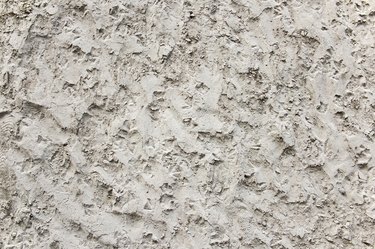
Popcorn ceiling was a big thing in the mid-twentieth century because it gives a room a cozy (some would say closed-in) feeling. It has fallen out of favor for a number of reasons, not the least of which is that it's a dust and cobweb magnet, and its deep crevices make removing collected dust and dirt frustratingly difficult.
If you've had it with your popcorn ceiling, and you live in a house built before 1980, it's important to remember that, in the heyday of popcorn texture, asbestos was a common ingredient in texturing material. This fact makes it important to get the texture tested before you proceed with removal. The EPA provides a list of testing facilities on its website, and home testing kits are also available at home improvement outlets if you want to do the testing yourself. If the texture tests positive for asbestos, most states allow you to remove it yourself as long as the asbestos content is less than 1 percent, but you need to hire an asbestos abatement professional to dispose of it. If the asbestos content exceeds 1 percent, the law requires you to hire a professional to remove it. Whatever the concentration, check with your local building department to make sure it's legal for you to remove it yourself.
Video of the Day
Video of the Day
Removing Popcorn Ceiling Is Messy
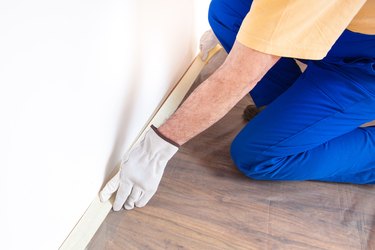
If you decide to proceed with removal on your own, get ready for a mess. Take all the furniture out of the room and cover the floors with disposable drop cloths. You'll be able to fold these up when the job is done and put them—along with all the texture you removed—in plastic bags. Be sure to tape the drop cloths to the baseboards.
Whether or not the texture contains asbestos, it's important to close the air vents and cover them with plastic to prevent dust from circulating throughout the house. Also, cover the electrical outlets with plastic and close the windows to prevent dust from settling outside. Take down the light fixtures and ceiling fan, which will just get in the way, and set up a work light. Put on protective clothing and goggles, and cover your head. You'll also need a face mask—a painter's respirator is recommended.
Expose the Popcorn Texture
You may be lucky and find that your ceiling hasn't been painted, but that isn't likely. The paint prevents the texture from getting wet, so you have to remove it, because you have to soak the texture before you can scrape it off. Sometimes you can expose enough texture by sanding with a pole sander and coarse sandpaper, so that's worth a try. However, if you have to remove several coats of paint, you may have to resort to a chemical stripper. Soy-based products are environmentally friendly and are safer and easier to use than those that contain methyl chloride, and they are strong enough to do the job. Spread the stripper with a roller and scrape it off with a paint scraper. Some of the texture will come off when you scrape, but that's a good thing. The more the better.
Soak and Scrape the Popcorn Texture
Once enough of the texture is exposed, it will turn to mush when you soak it with a garden sprayer. Add about two to three tablespoons of dish soap per gallon to the water to improve penetration. Other concoctions that homeowners have used with success include a mixture of 1 cup vinegar and 7 tablespoons of dish soap per gallon of water and a solution of water and fabric softener. The hotter the water you use, the better.
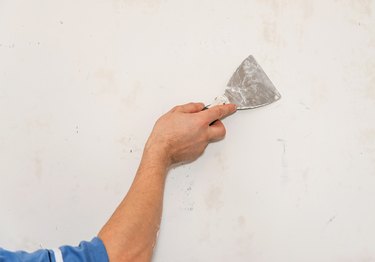
Spray a 6-foot square section of the ceiling, wait about 20 minutes, then soak again and start scraping with a 6-inch scraper or a floor scraper. Use firm but gentle pressure when scraping to avoid damaging the drywall. If you can't get all the texture off in one go, spray and scrape again. Use a putty knife to get into the corners and to remove especially difficult patches.
Patch the Ceiling, if Necessary
Popcorn texture was often applied to plaster ceilings to cover cracks and other flaws. So you may find that there is patching to do once you removed the texture. Drywall, too, may show flaws after you remove the texture. Before you paint, cover over cracks or other flaws with wallboard compound or patching plaster.
Get Ready to Paint the Ceiling
The drywall will probably be wet after you've removed all the texture, so let it dry for 24 to 48 hours before painting. Hopefully, you didn't damage any drywall, but if you did, you can make repairs with drywall tape and compound before the drywall is dry. Once the ceiling is dry and you've completed your repairs, sand the ceiling with a pole sander and 120-grit sandpaper, and it's ready for a coat of drywall primer and two coats of ceiling paint.