How to Clean Ceilings. Ceilings get as dirty as the rest of the house, which means they also require regular cleaning. Depending on the type of ceiling and how dirty the surface is, here are some different ways to tackle the job.
Step 1
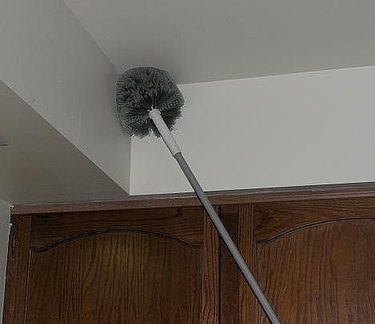
Remove cobwebs with a round-headed cobweb brush. Reach into far corners and run through the edges. Some cobwebs are not easily visible.
Video of the Day
Step 2
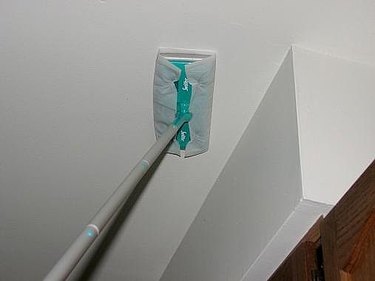
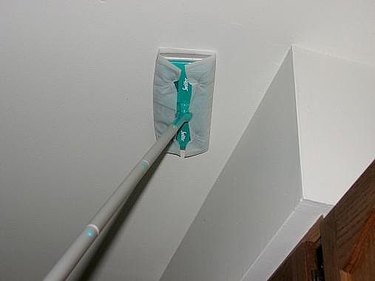
Dust the ceiling surface. Long-handled dusters are available in many brands at the supermarket or home improvement stores. Choose the ones that will extend long enough to reach your highest ceilings. Get the "magnetic" type of duster to optimize dust pickup and retention.
Step 3
Vacuum dirt-prone areas around vents and light fixtures. Use a vacuum cleaner with a long extension fitted with a soft brush tip to avoid spreading the dust around.
Step 4
For painted ceilings that are dirty or oily, especially in the kitchen, use a wet sweeper that has been pre-treated to clean out dust and grime. As a substitute, use a sponge mop dipped in a mild solution of all-purpose cleaner and water. Wring the mop to minimize dripping. Dry the wet ceiling with rags or towels to minimize water spots.
Step 5
For washable wallpapered ceilings, use a sponge mop dipped in a mild solution of dishwashing detergent and water. Wring the mop to minimize dripping, and immediately wipe ceiling dry with a rag or towel.
Step 6
For "popcorn" and other spray-on textured ceilings, refrain from any wet or wipe-down cleaning, which would knock down the texture effect. Use a vacuum cleaner with a long extension fitted with a soft brush tip. Commercial textured ceiling cleaners are available.
Video of the Day