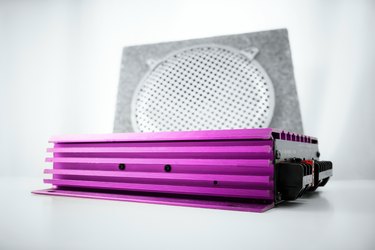
How to Bridge an Amplifier

There are many reasons to bridge an amplifier, the main one being to get more power to your speakers and produce a better quality sound. Basically, the process lets you combine the power output of two channels into a single channel. This means that you can get more power to one speaker than you can to two that don't have the bridging in place.

Instructions

    • 1

      Read all the paperwork that came with your amp. It's important that you understand as much about your amp as possible before trying to bridge it. Often amplifiers come with a diagram for bridging, which makes your job a lot easier.

    • 2

      Figure out how many channels you need to bridge. If you have a four-channel amplifier, then you'll be bridging it into a two-channel. A two-channel amp will be bridged into a single channel. So the bridged amp should have half the channels of the original amp.

    • 3

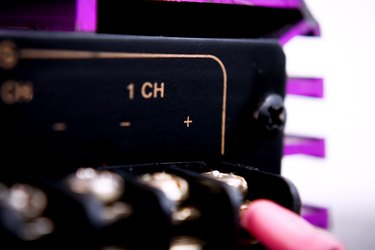
      Identify the terminals. For each channel, you should see a positive and a negative terminal. So if your amp has two channels, there should be four terminals total. (A four-channel amp will have eight.) Label each with an identifier on a piece of masking tape, something like A: channel 1, positive; B: channel 1, negative; and so on.

    • 4

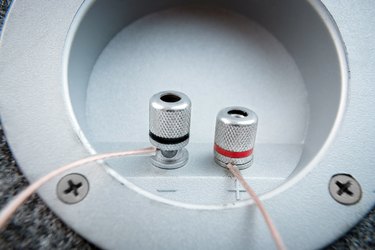
      Connect the amplifier to the speaker properly. You should connect the red speaker wire to the terminal labeled A. Then connect the black speaker wire to the terminal labeled D. Then take a short wire and connect terminal B to terminal C to create a bridge between the two channels.

    • 5

      Test your equipment to make sure it works properly.

Tips & Warnings

  • Use extreme caution; doing the process incorrectly can damage your equipment.

  • If you bought an entire system, make sure your amplifier isn't already bridged; this is a common mistake.

Related Searches:

Comments

You May Also Like

  • How to Bridge an Amp to Two Speakers

    Many multi-channel car amplifiers are built with the option to "bridge" the output. Bridging takes the output of two channels and combines...

  • How to Bridge Power Amplifiers

    A bridged amplifier combines the output from a multichanneled amplifier and uses it to drive a fewer speakers with more power. Bridging...

  • How to Bridge a Car Audio Amplifier

    Bridging your car audio amplifier is a great way to get better sound coming out of your speakers. The process of bridging...

  • How to Bridge Power Amps

    Bridging amplifiers means using more than one power source to drive a load, which is typically a loudspeaker in audio applications. Bridged...

  • How to Bridge a 4 Channel Amp

    Bridging a four-channel car audio amplifier will effectively double your amp's output (watts) so that you can drive more power to your...

  • How Do You Bridge a Car Amplifier?

    Bridging a car amplifier involves splitting the music system for a better sound delivery. Build up your car's amp with help from...

  • How to Bridge Visonik Amplifiers

    Bridging an amplifier is a good way to produce extra power to subwoofers and the same goes for a Visonik amplifier. When...

  • How to Bridge a Car Stereo Amplifier

    Combining the channels in an amplifier is known as bridging. This is most commonly used in car amplifiers where a stereo or...

  • How to Bridge a Car Amp

    Bridging a car amplifier will increase the power output of your amplifier by combining the power that would normally be sent to...

  • How to Connect a Bridged Speaker to an Amplifier

    "Bridging" is an often misunderstood process in car electronics. Bridging involves the connection of a single speaker to a 2-channel amplifier, where...

Related Ads

Featured