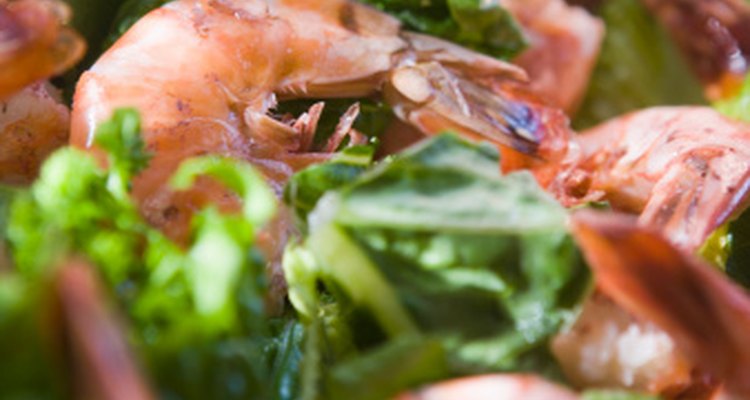
Adding shrimp to a salad can turn it into a main dish; all you need add is bread and butter. Cooking fresh shrimp for salad takes very little time, so make sure everything else is prepared so it is ready when the shrimp is done. To make a dish that is a real showpiece as well as delicious, prepare a garlicky sizzling shrimp salad.
Garlicky Sizzling Shrimp Salad
Put the tomatoes in the bottom of a decorative salad bowl. Add the crisp lettuce, torn into bite-sized pieces, herbs and green onions. Spread the damp paper towels over the top and put the salad in the refrigerator for 1 hour to crisp.
When you are ready to serve the salad, put the salad on the table for your guests, with good sourdough bread and butter. Give them each a glass of the same white wine you are using in this dish. They can eat bread and butter and drink wine while you finish preparing the salad.
Salt the shrimp and place near the stove. Heat the oil in the frying pan. When the oil is hot, add the butter. When it melts, add the garlic. Stir until the garlic is very fragrant. Add the shrimp and stir occasionally until they turn pink. Add the wine, lemon zest and lemon juice. Cook for another 1 to 2 minutes until the shrimp are cooked through and butter and wine are sizzling. Test for doneness by cutting one of the shrimp open.
Bring the sizzling shrimp and sauce to the table and pour the hot shrimp over the cold salad. Toss until all the greens are coated with the garlicky sauce. Serve immediately.
This recipe serves four to six people generously. Make the salad with snails instead of shrimp, if you want to be more adventurous.
Other Ways to Cook Shrimp for Salad
Simmer fresh shrimp in salted water for 3 to 6 minutes, until the shrimp is opaque throughout. Refresh the shrimp in cold water, drain and add to your salad.
Bake shrimp, drizzled with olive oil and salt, in your oven at 400 degrees Fahrenheit for 8 to 10 minutes until it is opaque throughout. Cool and add to your salad.
Brush the shrimp with oil and sprinkle with salt and pepper. Brush a preheated grill with oil and grill the shrimp over medium coals until opaque throughout, turning them once after 3 minutes. Cool briefly and add to your salad.
Related Articles
How to Cook Shrimp With Butter
Appetizers Using Cooked Shrimp
How to Cook Benihana Shrimp

How to Make Shrimp Cocktail
How to Cook Shrimp in a Skillet
How to Prepare Live Shrimp
How to Prepare Pre Cooked Shrimp
How to Cook Prawns With the Shell On

How to Steam Lobster & Shrimp
Food Ideas for a Nautical Party

What Kind of Alcohol Is Good to Cook ...
How to Make Tortilla Soup
The Best Ways to Cook Scallops
How to Cook Red Snapper Jamaican Style

How to Cook Shrimp to Serve Chilled
The History of Bearnaise Sauce
How to Cook Ginataang Shrimp With ...
Jumbo Shrimp Nutritional Facts
How to Cook Shrimp Scampi in a Crockpot
How to Clean Soft-Shell Clams (Steamers)
References
Writer Bio
Ramona French owned a massage school and taught massage for 28 years. In that time she wrote textbooks on Swedish, acupressure, deep tissue and lymph drainage massage. She is the author of "Introduction to Lymph Drainage Massage" and "Milady's Guide to Lymph Drainage Massage." Her book, "The Complete Guide to Lymph Drainage Massage," published by Milady, was released in October 2011.
Photo Credits
Comstock Images/Comstock/Getty Images