How To

How to Use a Soaker Hose

Contributor
By Willi Galloway
eHow Contributing Writer
(39 Ratings)

Looking for an easy way to save time and money in your garden and have healthier plants? Invest in a soaker hose! Water seeps out of soaker hoses delivering H2O right to your plants' roots while keeping the leaves dry. Sprinklers can waste water due to evaporation and runoff, hand watering is time consuming and drip irrigation systems are expensive. Switching to soaker hoses means you'll waste less water, lower your water bill and won't have to haul your hose around the garden. Here's how to install soaker hoses in your garden.

Difficulty: Easy
Instructions

Things You'll Need:

  1. Step 1

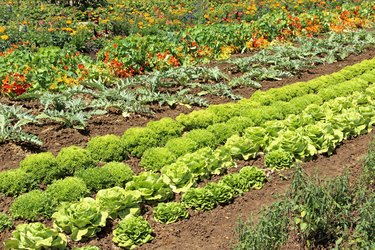
    Soaker hoses are typically made from recycled rubber and they work best when the hose length is less than 50 feet, any longer and you may experience uneven water distribution at the end of the hose. Soaker hoses work best when laid on flat, level surfaces, making them a great choice for vegetable beds.

  2. Step 2

    Place soaker hoses directly on top of the soil. Do not bury them under soil. You can lay soaker hoses out in straight lines or snake them through garden beds; either way, space the soaker hose lines 18 inches apart to ensure the entire bed gets an even amount of water. Keep the hose an inch or two away from the base of your plants.

  3. Step 3

    Soaker hoses come in tightly coiled packages. When the hoses are new they have an annoying habit of curling back up. Keep the hoses in place and prevent kinks by pinning them to the ground with U-shaped metal landscaping pins every 24 inches.

  4. Step 4

    Cover the soaker hoses with mulch after they are in place. The mulch does double duty by disguising the hoses and helping your soil retain moisture longer. Plus, it prevents weeds! Grass clippings or straw make a great mulch in vegetable beds, while wood chips and pine needles are a longer- lasting choice for ornamental gardens.

  5. Step 5

    Encourage your plants to develop deep, drought-resistant root systems by watering deeply but infrequently. Let the water soak 8 to 12 inches down into the soil each time you water. Figure out how long you need to keep your hose on by watering for 30 minutes and then checking how far down the water has seeped. Tweak your watering time accordingly.

Tips & Warnings
  • If your faucet is located far from your garden bed, install the soaker hose in your garden and then connect the soaker hose to the faucet with a solid hose.
  • Soaker hoses work best if you install a pressure regulator on your faucet and keep it between 10 and 15 psi.
  • If you notice dry spots in your bed, your soaker hose may be clogged. To flush it out, just unscrew the end cap and run water through the hose to remove any debris, then replace the end cap.
  • Increase the longevity of your hose by removing it from the garden in winter. Wash off excess soil from the hose, flush out the inside, loosely coil it and then store it indoors.
Resources

Comments  

laxliz04 said

Flag This Comment

on 6/2/2009 You must have one of the flat sprinkler hoses. If you put the holes facing up the hose will act like a sprinkler. Lay the hose with the holes facing down for more of a soaking action. There are also round black soaker hoses which have holes all over so there is no up or down.

carlacita said

Flag This Comment

on 5/26/2009 This may be a silly question, but do you place the hose with the holes facing the ground or facing upward?

Subscribe

Post a Comment

Post a Comment

Related Ads

  • Have you done this? Click here to let us know.
I Did This
Get Free Home & Garden Newsletters
Copyright © 1999-2010 eHow, Inc. Use of this web site constitutes acceptance of the eHow Terms of Use and Privacy Policy .   en-US † requires javascript

eHow Home and Garden
eHow_eHow Home and Garden