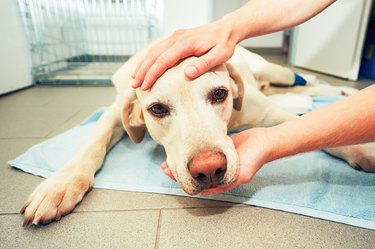
When you're sick, it seems like nothing can settle your upset tummy and the same is true for dogs. Just like us, they get sick and experience all kinds of tummy issues including diarrhea and vomiting. While sometimes these symptoms can indicate something very serious, they may just mean that your pup has eaten something he shouldn't have.
To really know what's going on with your dog, if he starts throwing up or has loose bowel movements over a period of more than 24 hours you'll need to visit your veterinarian. That way, your furry best friend can get checked out and treated so he's on his way to recovery.
Video of the Day
Video of the Day
Dog vomiting and diarrhea
Dog vomiting and diarrhea should never be ignored. If you notice your dog has runny poop or is throwing up, it could indicate a number of medical conditions. Should these be the only symptoms, your dog may simply be dealing with a bit of indigestion. This is true even if she's throwing up yellow bile and having diarrhea.
Indigestion is a common side effect if you've recently switched your dog onto a new food, which could trigger stomach upset. That's why it's so important to transition your dog slowly onto a new food over a period of days. Dogs with runny poop could also be suffering from indigestion after eating something yucky outside, munching on grass, or even eating table scraps.
If there are other troubling symptoms like lethargy, lack of appetite, behavioral changes or any other things that are out of the ordinary for your pooch, it could be a sign of something more serious.
Causes for concern
Bloody diarrhea in dogs or bloody vomit is a sign that something much more serious could be going on, such as an infestation of intestinal parasites or hemorrhagic gastroenteritis, which is a life-threatening condition. It could also indicate gastrointestinal ulcers, liver, cancer, or kidney disease. If you notice any blood in your dog's stool or vomit, it's best to get to the veterinarian for a proper diagnosis.
Throwing up yellow bile and diarrhea is another potentially serious problem for dogs. It usually just means that your dog hasn't eaten in a while and the yellow digestive fluid produced in his liver is irritating his empty stomach. It can also indicate pancreatitis, liver disease, an intestinal blockage, or parasites, so it's best to get to the vet to determine the cause.
If your dog is throwing up green bile, this could mean that he's ingested rodent poison and needs immediate vet care, warns PetMD. And if your dog continually tries to vomit, but can't, it could indicate that she's suffering from gastric dilatation and volvulus, a condition commonly known as bloat. This is potentially life-threatening and requires immediate veterinary care, according to WebMD.
Dog diarrhea treatment
To deal with dog diarrhea, the first step is trying to settle your dog's stomach if she's not exhibiting any other symptoms that warrant a trip to the vet. Feed your dog a bland diet of pureed boiled chicken and rice or pureed boiled chicken and potatoes for a few days in small amounts throughout the day. This will help stop diarrhea, settling her stomach in case it's food-related. Make sure your pup also has plenty of water to drink because diarrhea in dogs can be very dehydrating.
Slowly switch her back to her normal diet over the period of three-to-four days, mixing the normal diet with the bland food in larger and larger quantities each day. If she doesn't improve at all during the first day or two, she'll need to see the vet for an exam.
Dog vomiting and feeding
To deal with vomiting, with or without diarrhea, you may want to withhold food from your dog for up to six hours in the initial stages, recommends Dr. Carol Osborne of the Chagrin Falls Veterinary Center & Pet Clinic. This gives your dog's stomach a chance to recover from any potentially upsetting food he ate. And, if he continually vomits after drinking water, you may want to withhold that and instead offer him ice cubes for a couple of hours.
To settle his tummy, brew up some chamomile, ginger, or peppermint tea and feed him a tablespoon of the liquid every 15-to-30 minutes for two-to-three hours.
If your dog is throwing up yellow bile and having diarrhea, it could be that he needs more frequent and smaller meals throughout the day or a switch to a low-fat, high-fiber diet, recommends PetMD. Try dividing his portions into three to four meals that you give him every few hours to keep his stomach full and prevent the bile from upsetting his tummy.
Medications for vomiting and diarrhea
Your vet may prescribe pup-safe medications to help with dog vomiting and diarrhea. These medications, including over-the-counter ones like bismuth subsalicylate and famotidine, may help settle her stomach and firm up her stool.
Never give any medications to your dog without consulting with your vet, who can properly determine which medications and how much of the medications to give your dog. He may also recommend hospitalizing your dog, depending on the severity of her symptoms and giving her intravenous fluids to keep her hydrated.
Always check with your veterinarian before changing your pet’s diet, medication, or physical activity routines. This information is not a substitute for a vet’s opinion.
- Pet MD: Dog Vomiting -- Why is My Dog Throwing Up?
- Dr. Carol Osborne of the Chagrin Falls Veterinary Center & Pet Clinic: What to do for Dog Vomiting
- Merck Manual Veterinary Manual: Hemorrhagic Gastroenteritis in Small Animals
- Pet MD: 5 Reasons Why Your Dog Is Throwing Up Bile
- WebMD: 6 Most Common Dog Health Problems
- PetPlace: Home Care for Dogs with Diarrhea and Vomiting
- WebMD: Dog Bloat: Symptoms, Causes, Treatments