-
Step 1
Roll a small clump of damp soil into a ball. Then, tap it. If it breaks apart easily, you have sandy soil. If it bonds together, you have clay soil.
-
Step 2
Add organic material to the garden, such as peat moss or compost. This will add nutrients to the soil and improve its texture. The organic material will retain moisture in sandy soils and add drainage to clay soils. For heavy clay soils, you also might need to add some sand. Your goal is to get a light, rich-looking mixture of soil.
-
Step 3
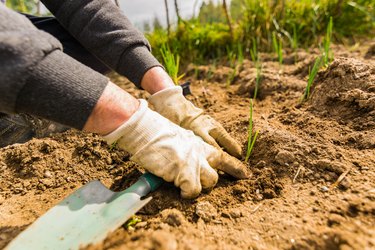
Dig a hole in your planned garden. Fill it with water. If it drains in just a few minutes, your soil drains too quickly and is still too sandy. If there is standing water in the hole an hour or so later, your soil still has too much clay. You want a soil that drains steadily, but slowly enough that plants can absorb the moisture.
-
Step 1
Test your soil using an inexpensive kit that can be bought at a nursery or home and garden center. Alternatively, have a soil sample analyzed by a local nursery or extension center. You want to know the levels of potassium, nitrogen and phosphorous in your soil. Your kit or analysis will tell whether your nutrient levels need to be improved.
-
Step 2
Adding organic matter, such as compost, will add nutrients to the soil.
-
Step 3
Place a thick layer of mulch over the soil, which will add nutrients to the soil as it breaks down.
-
Step 4
Add fertilizer to soil that has very few nutrients. Alternatively, add fertilizer when planting and then add it regularly to ensure the soil stays nutrient-rich. Remember that potassium stimulates root growth, phosphorous stimulates overall growth and nitrogen stimulates stem and foliage growth. Some fertilizers also include elements like zinc or calcium.
-
Step 1
Decide what kind of plants you will be growing. Some plants, such as azaleas, lilies and roses, prefer a slightly acidic soil, meaning the pH is below 7.0. Others favor alkaline soil. Few plants, however, will thrive in highly acidic or alkaline soils. When in doubt, it’s best to be as close to neutral (7.0) as possible.
-
Step 2
Use finely-ground lime in your soil to raise the pH. Lime can be purchased at home garden shops. Larger particles of lime are good for lawns or large areas, but finely-ground lime is best for gardens. Alternatively, you can raise the pH in your garden cheaply by adding ash from a woodstove or camping trip.
-
Step 3
Add sulfur or aluminum sulfate to your soil to lower the pH. Aluminum sulfate generally works much quicker than sulfur, though sulfur is generally cheaper.
-
Step 4
Mix the additive into your soil well, following the directions on the packaging.
-
Step 5
Test the soil to make sure you have reached adequate pH and nutrient levels before planting.