Menopause & Nosebleeds
During the stages of menopause, a woman's body is dealing with significant fluctuation in hormone levels. One symptom that women going through the stages of menopause usually face is nosebleeds. It is because of hormonal changes that affect a woman's reproduction, that common symptoms such as nosebleeds occur during the menopausal process.
If you are experiencing serious medical symptoms, seek emergency treatment immediately.
Causes
The changes in hormones during menopause can cause the tissues in the nose to dry out or become smaller. Therefore, the nose tissue is more prone to cracks, cuts and bleeding. Reoccurring nosebleeds are usually another symptom that menopause is occurring.
- The changes in hormones during menopause can cause the tissues in the nose to dry out or become smaller.
- Reoccurring nosebleeds are usually another symptom that menopause is occurring.
Treatment/Prevention
How to Treat Nose Bleeds With Blood Thinners
Learn More
When the tissue becomes dry and cracked, it's important to keep the skin lubricated and soft. Simple items such as lotion or an antibiotic, such as Neosporin, can help to moisturize the dry skin inside of the nose. You can prevent further cracking by using a humidifier, which allows moisture to accumulate in the air you breathe. Avoid air conditioners and furnaces because they dry out the air.
- When the tissue becomes dry and cracked, it's important to keep the skin lubricated and soft.
- You can prevent further cracking by using a humidifier, which allows moisture to accumulate in the air you breathe.
Nosebleed Relief
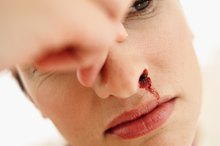
When nosebleeds do occur, it is important to treat it properly. When the blood first begins flowing, squeeze and hold your nostrils together tightly. The nosebleed will usually clot and the added pressure helps it form a scab. Don't put your head back because it causes blood to drain down the throat. After the bleeding has stopped, use the moisturizer or decongestant spray, such as Neo-Synephrine. Wet a piece of cotton with the Neo-Synephrine and place the cotton inside of your nose. Hold your nostrils together for five or so minutes. In some cases of prolonged bleeding, ice the forehead and bridge of the nose. This method will help stop the bleeding and cool the skin down.
- When nosebleeds do occur, it is important to treat it properly.
- Wet a piece of cotton with the Neo-Synephrine and place the cotton inside of your nose.
Warning
Nosebleeds During Exercise
Learn More
If a nosebleed is serious or isn't stopping, it is important that you see further medical attention. A nosebleed is considered to be dangerous when the bleeding does not stop for more than 10 minutes. This is because, blood loss can become a serious problem and you may begin to feel weak or dizzy.
Serious Treatments
If nosebleeds are becoming common for you, there are more serious treatments that you can have your doctor perform. The doctor can stop a serious nosebleed by packing your nose with surgical gauze. Another treatment includes sealing the blood vessels inside of your nose through cauterizing (surgical burning).
Related Articles

How to Treat Nose Bleeds With Blood Thinners
Learn More
Nosebleeds During Exercise
Learn More

Is it Normal to Bleed When You Exercise?
Learn More

Oxygen & Severe Nosebleeds
Learn More
Bump on the Inside of the Nose
Learn More
Why Does a Nose Bleed Suddenly?
Learn More

Nosebleeds & Weight Loss
Learn More
Itchy Skin on the Nose
Learn More

Fish Oil and Nose Bleeds
Learn More
How to Care for Your Broken Nose
Learn More