How To

How to Prune Climbing Roses

Member
By only1special1
User-Submitted Article
(16 Ratings)
Prune Climbing Roses

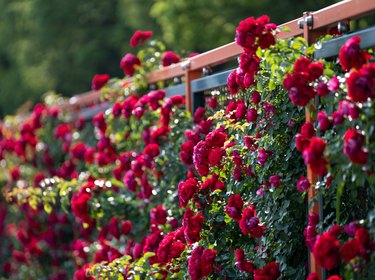
Climbing roses are a beautiful aspect of any garden but, as with all roses, they need to be pruned and trained to grow into the shape and size that you desire. Climbing roses, however, are different from standard roses in the MANNER in which you need to prune them.

Difficulty: Moderately Easy
Instructions

Things You'll Need:

  • sharp bypass pruners
  • long-handled pruners (loppers)
  • a pair of heavy gloves
  • rubbing alcohol
  • long sleeved shirt
  1. Step 1

    Climbing roses get a different treatment than standard roses bushes, and that treatment depends on whether they are ramblers or large flowered climbers. Ramblers usually have smaller flowers and grow rampantly, sometimes up to 20 feet in one season! If they are left unpruned, they will grow into a thorny, overgrown thicket. They only bloom once a year, and do so on OLD wood grown the previous season. The best way to prune these is to cut the canes back as soon as they are done blooming. This encourages new growth this year so they will have plenty of wood to bloom on next year. Tie the new growth to a fence or trellis with soft twine or nylon pantyhose.

  2. Step 2

    Large flowered climbers are less vigorous in their growth and often require very little pruning during their first few years. Initially, you only need to prune to remove any dead or diseased wood. In their first few years, you need to train them onto a fence or trellis. Tie the new growth with soft twine or nylon pantyhose. As the rose grows, you will need to prune to shape and control its height.

  3. Step 3
    The black marks indicate cuts.
    The black marks indicate cuts.

    Pruning needs to be done in the early spring. The first step is to look at the rose and decide on your desired shape. Then cut out old branches (canes) that bloomed the year before.

  4. Step 4
    The black marks indicate cuts.
    The black marks indicate cuts.

    Next, you need to cut out all the dead, weak, or thin canes, leaving four or five strong new ones.

  5. Step 5
    The black marks indicate cuts.
    The black marks indicate cuts.

    Cut back the canes you decided to leave. Cut them down to where they have four to five sets of leaflets. This will encourage lots of new growth, which is what this type of climber blooms from. After pruning each plant, clean your equipment with the rubbing alcohol in order to prevent the spread of disease between plants.

  6. Step 6
    Tie the new growth to the support structure.
    Tie the new growth to the support structure.

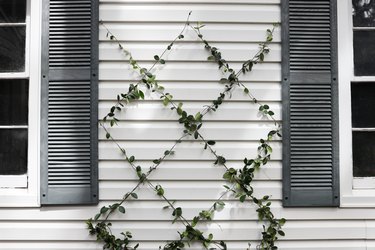
    After you have cut back your selected canes, tie them to your fence or trellis with soft twine or nylon pantyhose. This will help the cane support the weight of the new growth. As the new growth emerges, be sure to continue your maintenance by securing the new growth to the fence or trellis. Be vigilant with this as the new growth can break from the weight of the blooms if it is not secured to the supporting structure.

Tips & Warnings
  • Be sure to wear long sleeves and heavy gloves to protect yourself from thorns.
  • Rose bushes are pruned differently. If you have any questions, please ask me or read my article HOW TO PRUNE ROSE BUSHES
  • Some roses bloom on old wood and need to be pruned accordingly. To determine if you have an old wood rose or how to prune one, read my article HOW TO PRUNE OLD WOOD ROSES

Comments  

Flag This Comment

on 1/2/2009 steps 1 and 3 contradict each other. step 1 says to cut after they bloom on old growth from the year before. step 3 says to cut in early spring by cutting back the old wood.

Post a Comment

Post a Comment
  • Have you done this? Click here to let us know.
I Did This

Related Ads

Home & Garden
Ruby Bayan,

Meet Ruby Bayan eHow's Home & Garden Expert.
Get Free Home & Garden Newsletters

Copyright © 1999-2009 eHow, Inc. Use of this web site constitutes acceptance of the eHow Terms of Use and Privacy Policy.   en-US

eHow Home and Garden
eHow_eHow Home and Garden