How to Read Tire Sizes
by Andrew Chen
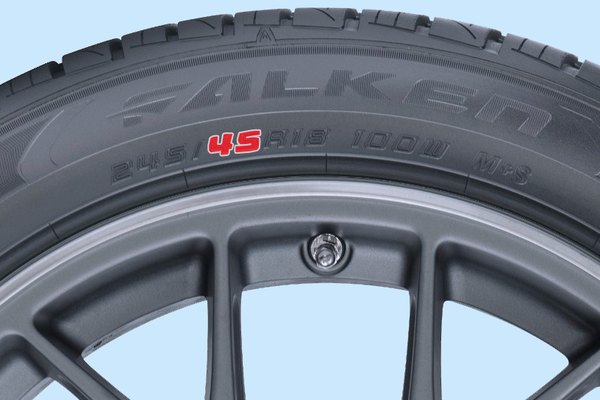
A tire's dimensions can be determined by reading the markings on the sidewall. An example tire size is 245/45R18, which tells us the width, sidewall height, internal construction and matching wheel diameter. Let's take a closer look at the size stamp on this Falken ZIEX ZE950 all-season tire.

Section Width
The first three digits indicate the section width, or cross section, of the tire in millimeters.
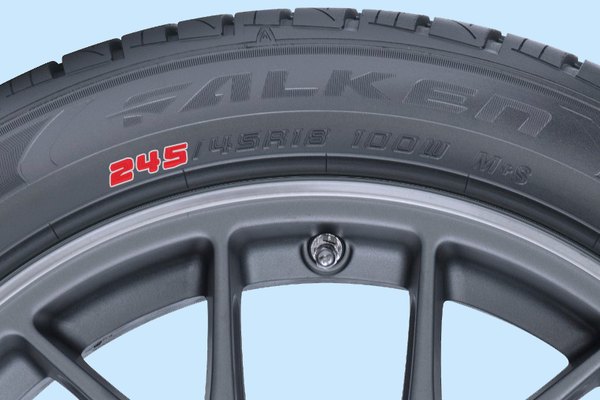
The section width is defined as the widest point of the inside sidewall to the widest point of the outside sidewall when mounted on an appropriate wheel . For this ZE950 tire, the section width is 245 millimeters or 9.6 inches.

Sidewall Aspect Ratio
The two numbers following the section width identify the sidewall aspect ratio, and is commonly referred to as the tire's profile or series. The aspect ratio is presented as a percentage of the section width. In 245/45R18, the 45 denotes the sidewall height is 45 percent of its section width of 245 millimeters, making it 110 millimeters tall or 4.34 inches.
Warnings
Using a tire with a different aspect ratio from the Original Equipment Manufacturer (OEM) specs will cause the speedometer to be inaccurate.
Internal Construction
The letter following the aspect ratio indicates the type of internal construction.

- R: Radial - most common construction for modern tires.
- D: Diagonal - usually found in light truck tires and spare tires.
- B: Belted - an outdated construction method that is no longer used.
Tips
High performance tires with a Z-speed rating (a maximum speed capability greater than 149 MPH) will have the letter Z in front of the internal construction letter. For example, 245/45ZR18.
Wheel Diameter
The last numbers in the sequence indicate the wheel diameter (in inches) that matches the tire. This means that the 245/45R18 tire will mount properly onto an 18-inch wheel.

Warnings
Always confirm that the tire and wheel diameters match before mounting the tire onto the wheel.
References
Things You'll Need
- Notepad and pencil
Writer Bio
Since moving from his hometown of Houston, Texas, Andrew Chen has experienced life as a chemical engineer, an actor and most recently an automotive journalist.


