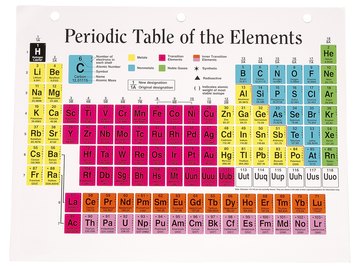

Some science classes will require students to memorize the periodic table of elements. However, even if this is not a requirement, having the table memorized may still come in handy, especially in more advanced courses. At first glance, the periodic table is intimidating, full of unfamiliar symbols and numbers. Fortunately, however, there are several tricks and aids to help you memorize the table. But regardless of which method you use, you'll still have to put in a lot of time and effort.
Put a small copy of the periodic table in your purse or wallet and study it when you have down time. This can be during commercials while watching TV, while waiting in line at the grocery store or when traveling on the subway. You can download an app for your iPhone or Android smartphone that has the periodic table as well as descriptions of each element.
Memorize the mnemonic alphabet. This is a tool used by memory experts to help them relate words and letters to numbers. Each number, zero through nine, is assigned to a specific set of letters for specific reasons. After learning the correlations, you can then assign your own made-up words to something with a numerical value, like the periodic table. It sounds tricky at first, but the mnemonic alphabet is a tool that will help you memorize numbers for the rest of your life.
Study Dr. John P. Pratt's periodic table memory pegs. This tool will allow you to connect the periodic table of elements with symbols, helping you memorize the information more efficiently -- much in the same way that flash cards work. On Dr. Pratt's website, johnpratt.com, move your cursor over an element to see the name of the element along with the explanation of the symbol. For instance, the element Magnesium is represented by a 16-ounce coffee mug. This is because magnesium's atomic number is 16 and its atomic symbol is Mg.
Break the chart down into sections. Realize how many elements are in each row to begin with. There are seven rows, which are composed of 2, 10, 18, 36, 54, 86 and 118 elements respectively. The periodic table is also color coded according to types of elements. There are alkali metals, actinides and noble gases to name a few. Memorizing one section at a time may help you digest the information more quickly.
Create flash cards. Put the atomic symbol and number on one side and the full name of the element along with its atomic weight on the opposite side. Mix the cards up and quiz yourself randomly.
Tips
References
Tips
- Put a small copy of the periodic table in your purse or wallet and study it when you have down time. This can be during commercials while watching TV, while waiting in line at the grocery store or when traveling on the subway.
- You can download an app for your iPhone or Android smartphone that has the periodic table as well as descriptions of each element.
About the Author
Thomas McNish has been writing since 2005, contributing to Salon.com and other online publications. He is working toward his Associate of Science in computer information technology from Hillsborough Community College in Tampa, Fla.
Photo Credits
Hemera Technologies/PhotoObjects.net/Getty Images