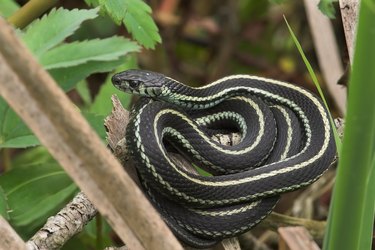
The truth is, snakes don't want to see you any more than you want to see them. You may find these creatures disgusting and frightening, but they probably feel the same way about you. Although some snake species are venomous, snakes are more often a nuisance than a threat. If they bother you, however, you can discourage them by sealing holes in your home, eliminating their food sources and removing landscape objects that offer them shelter. Don't attempt to poison the snakes or deter them with chemicals, however, as these methods are ineffective against the snake and potentially dangerous for people and pets. Additionally, don't try killing them, as this is when most people suffer bites. Instead, opt for safe snake control methods that have been proven effective.
Eviction Notices
Video of the Day
If you want snakes to live somewhere other than in your yard, you need to tell them so as clearly as possible. The best method of evicting snakes is to remove the things they call home. Snakes hide in thick mulch, long grasses and debris piles. Mow your grass often and use a trimmer to cut any grass or weeds growing close to buildings, fence posts and other structures. Rake up fallen leaves every fall and thin your mulch to a depth of no more than three inches. Store firewood piles as far from your home as possible and place them on a rack at least 12 inches off the ground. Eliminate stone walls and rock piles, as well, as these provide lots of nooks and crannies for both snakes and their prey to live in.
Video of the Day
Banish the Buffet
If your yard is full of snake food, you're going to have snakes. Snakes eat small rodents, frogs, toads, slugs and insects, so making your lawn less appealing to these critters also makes it less appealing to snakes. Many of the animals snakes feed on hide in the same landscaping features as the snakes themselves, so cleaning up your lawn actually serves two purposes. To further discourage rodents, slugs and insects, remove anything that collects and holds water from your yard. Eliminate pet food dishes, animal feed, bird feeders and other food sources that may draw unwanted critters and ultimately snakes.
Seal Holes
Sometimes, snakes in your yard become snakes who find their way into your house. Avoid this unpleasant surprise by sealing any openings around your foundation with caulk or 1/4-inch mesh hardware cloth. Look for cracks and fissures as well as places where plumbing pipes and electrical wires enter your home. Cover dryer and plumbing vents as well. Snakes generally don't climb, but they can, so check for openings around door and window frames and make sure your windows are properly screened. Door sweeps close the gap below doors and prevent snakes from crawling in through them.
Catch and Release
If you do stumble across a snake in your yard, relocating him is sometimes an option. First, verify that the snake is not venomous. Venomous snakes have elliptical pupils while nonvenomous species have round eyes. The scales under the snakes' tails are different, as well. Venomous snake scales remain undivided while nonvenomous varieties have divided scales on their tail that resemble a herringbone pattern. If you're close enough to determine that the snake is nonvenomous, lay an open box or trash can on its side near the snake and sweep it into the box using a broom or rake. Close the box and release the snake elsewhere (with the landowner's permission).
If you're not sure whether or not the snake is venomous, leave it alone rather than take the risk. Remember that even nonvenomous snakes may bite. Instead of the fangs found on venomous snakes, many nonvenomous snakes have tiny teeth. Their bites aren't lethal, but they can still be painful. If a snake is endangered, moving or handling it is an illegal act. Check with your local animal control office before catching or releasing the snake to stay in compliance with the law.
Snake Fences
Expensive but effective, installing a snake fence around your yard is helpful if you happen to live in an area with venomous snakes. Snake-proof fencing consists of 1/4-inch mesh wire. It extends six inches into the ground and stands 30 inches above it. The top of the fencing tilts out at a 30-degree angle to prevent snakes from crawling over it. When installing a snake fence, you must also remove any adjacent tall shrubs or trees that could allow the snake to circumvent the fencing. Due to the expense associated with fencing, homeowners often elect to enclose only dog runs or children's play areas rather than fencing their entire property. You can save money by installing your own snake fence. If you do, remember to put the supporting poles on the inside of the fence.