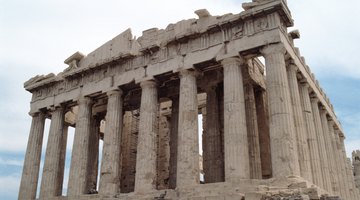


As Rome acquired importance and stature in the ancient world, the Romans looked to another great culture of the time, the Greeks, for architectural inspiration. The Romans took Grecian ideas and modified them to incorporate distinct Roman character and purpose.
Domestic Architecture

Many Greeks migrated to Rome during the rise of the Roman Empire. Greek artists designed the homes of prominent Roman citizens.
Columns

The Romans modified Grecian Doric columns by adding a separate base and more ornamentation. The Romans used Corinthian style columns extensively because of their lavish embellishments.
Temples and Basilicas

Roman temples, unlike Greek temples, were small and varied in their structure. The Romans incorporated the Greek use of columns on the temple façade and the use and placement of the triangular pediment. The word “basilica” is Greek for “royal.”
Theaters
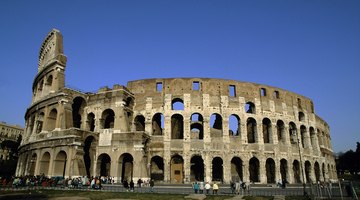
Initially, conservative Romans built temporary theatrical structures. Later on, the Romans modeled their permanent theaters after the Greeks, but built the stage building one story higher and turned the orchestra pit into seating because Roman theater did not require a chorus.
Materials

The Romans imported marble from Greece before they discovered extensive Italian marble deposits. The Romans invented and utilized cement.