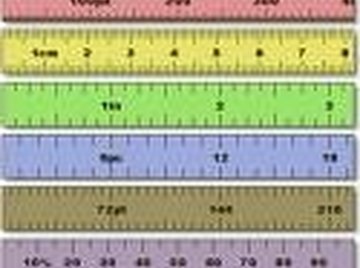

Reading a ruler is important for exact measurements, (and knowing small distances in general). It's crucial to have an exact measurement, so this article will show you how to read a ruler measurement and get the job done right, in just 3 easy steps!
Depending on your purchase, your ruler may measure in 1/8ths or 1/16ths (these are the number of little tick marks in between numbers), it's good to know which your ruler is. If you have doubts, start counting the tick marks between the 1 and the 2 (for inches). If you get higher than 8, your ruler goes by 16th's!
Now you're ready to measure. Line up the base of the ruler with the base of whatever it is you're measuring. Make sure the ruler is steady and won't be moving around, this is crucial for a close measurement.
The last step to read a ruler measurement is to actually read the measurement! Count the highest whole number to the length of the object (so if the object goes past 7, but not to 8, stop at 7). After you read 7, every tick mark until you reach the length of the object. Your final measurement should be something like 7, and 3/8 inches. That wasn't so bad, was it? You might want to re-check the measurement just to make sure. Write down the measurement on a pad of paper so you don't forget it!
About the Author
This article was written by the CareerTrend team, copy edited and fact checked through a multi-point auditing system, in efforts to ensure our readers only receive the best information. To submit your questions or ideas, or to simply learn more about CareerTrend, contact us [here](http://careertrend.com/about-us).
Photo Credits
gnomecoder.wordpress.com