Things You'll Need
Lined paper (lines 1-inch apart)
Calligraphy pen
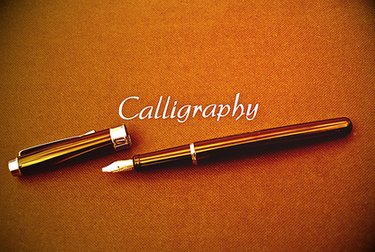
According to Princeton University's Wordnet, the definition of the word calligraphy is, in fact, "beautiful writing." With practice, a writer can learn the basics of calligraphy and use this talent to add a touch of style and grace. The first step to learning calligraphy is learning to hold a calligraphy pen properly. The foundation of calligraphy is the angle of the pen nib (the tip of the pen) to the paper. To master this angle, you must hold the pen properly.
Step 1
Sit at a table or desk in a comfortable chair. Provide yourself with adequate lighting so you can see your work surface well.
Video of the Day
Step 2
Place the paper in front of you on the flat surface. Some people angle the paper to facilitate a slant in the writing, and other people keep the paper straight and create the slant with their writing technique. Experiment with both paper positions to find what you prefer.
Step 3
Hold the pen in your dominant hand with your index finger and thumb loosely grasping the pen approximately 1 inch away from the tip. Allow the pen to rest gently onto the large knuckle of your index finger (at the base of your finger). The pen should be at a 45-degree angle as it sits loosely in your grasp, with the end of the pen pointing toward your shoulder.
Step 4
Rest your hand holding the pen on the paper and position the nib of the pen at the point where you wish to make a mark. Begin the first calligraphy stroke by putting the nib of the pen to the paper at a 45-degree angle and moving the pen smoothly on the surface of the paper. Make the pen movements with your forearm and not with your fingers to create stroking motions.
Step 5
Keep your hand and fingers motionless as they hold the pen, and make the strokes by moving your arm. Strive to maintain the 45-degree angle of the pen in your hand.
Video of the Day