Why Does My Jewelry Turn My Skin Black?
If you have ever taken off a piece of jewelry, like your wedding or engagement ring, and noticed that the jewelry left a dark mark--typically green or black--on your skin, you may have wondered why. Some are quick to label the jewelry as inferior or cheap; however, jewelry of all types can cause skin blackening.
Significance
Skin darkening or blackening due to jewelry may appear alarming or look unhealthy; however, it typically indicates a relatively benign chemical reaction occurring within the jewelry 3. If you are especially concerned, contact your physician.
Causes
What Causes Skin Discoloration From Gold?
Learn More
Skin blackening from jewelry is typical due to nickel allergies, electrolysis or metal abrasion. Nickel allergies are the primary cause. The metal strengthens other precious metals which may not be as resilient, like gold. The body's electrical currents can cause electrolysis, or metal corrosion, with some metals, especially copper. Typically, a green ring around your finger indicates your jewelry contains copper. Its outer coating has perhaps worn down, causing this reaction.
Metallic abrasion occurs when jewelry is worn with makeup. Nice Ice describes compounds in some cosmetics which contain tiny, harsh particles that look like jet black dust. These particles form black smudge upon contact with something absorbent like skin or clothing.
- Skin blackening from jewelry is typical due to nickel allergies, electrolysis or metal abrasion.
- The body's electrical currents can cause electrolysis, or metal corrosion, with some metals, especially copper.
Symptoms
If you are experiencing an allergic reaction to nickel in your jewelry, your skin will burn or itch along with the darkening. Electrolysis will make your skin look darker and possibly green, especially with copper. The addition of other metallic elements in your jewelry can cause the mark to appear more black or silver.
Catalysts
Things to Wear With a Purple Polo
Learn More
Some factors can increase the frequency or degree of skin darkening. Perspiration can promote the erosion of metals like copper. Skin blackening may be more common when participating in vigorous exercise or living in a humid environment. Environments containing bromine or chlorine, like a pool or hot tub, can also increase electrolysis in jewelry.
- Some factors can increase the frequency or degree of skin darkening.
- Skin blackening may be more common when participating in vigorous exercise or living in a humid environment.
Prevention/Solution
Frequent jewelry cleaning can help slow electrolysis. Also, remove jewelry when applying makeup. Before replacing the jewelry, thoroughly wash skin that has come into contact with makeup, recommends Nice Ice. If you live in a humid environment or perspire heavily, consider wearing moisture-absorbing powder on your fingers, wrist, neck or wherever else you wear jewelry. Always thoroughly dry your hands after washing. Some people take off their jewelry before washing hands, swimming and other activities.
- Frequent jewelry cleaning can help slow electrolysis.
- Before replacing the jewelry, thoroughly wash skin that has come into contact with makeup, recommends Nice Ice.
Related Articles
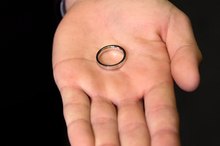
What Causes Skin Discoloration From Gold?
Learn More

Things to Wear With a Purple Polo
Learn More
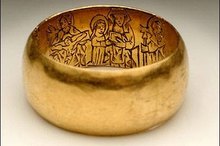
Why Does Gold Turn Your Skin Black?
Learn More

What Is Dark Skin Under the Armpit?
Learn More

Dark Pigmentation in the Elbows, Ankles and Inner Thigh
Learn More
The Gold Ring Test on Cheek for Iron Deficiency
Learn More
Why Do Moles Grow Black Hair?
Learn More
Why Should Women Wear Cotton Panties?
Learn More
Nontoxic Tattoo Ink Ingredients
Learn More

Allergies to Brass
Learn More
References
- General Chemisty Online: Why does gold darken some women's skin?
- Nice Ice: Why does Gold discolor my skin?
- Finishing.com: Skin-blackening reaction to 14K gold rings
- Rahman S, Walker D, Sultan P. Medical identification or alert jewellery: an opportunity to save lives or an unreliable hindrance?. Anaesthesia. 2017;72(9):1139-1145. doi:10.1111/anae.13958
- MedlinePlus. Do-not-resuscitate order. Updated February 18, 2018.
- MedlinePlus. Seizures. Updated February 27, 2017.
- Sizoo EM, Braam L, Postma TJ, et al. Symptoms and problems in the end-of-life phase of high-grade glioma patients. Neuro-oncology. 2010;12(11):1162-6. doi:10.1093/neuonc/nop045
- National Institute on Aging. Wandering and Alzheimer's Disease.
- Centers for Disease Control. Center for Preparedness and Response: ID Bracelet.
Writer Bio
Nicole Martinez began writing in 2010 and has since been published on various websites. She primarily writes about computer- and internet-related topics, especially those concerning website maintenance and programming.