



Explaining prepositions and prepositional phrases for kids includes information that a preposition is a word indicating place or direction. By extension, a prepositional phrase includes the noun object whose position or movement is being described by the preposition. Creative teachers use music, movement, games and writing to reinforce the concepts of prepositions and prepositional phrases.
Preposition Examples for Kids
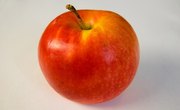
To look at prepositional phrases and prepositions examples for kids, explain that an apple may be on, in, under or beside the table. Next look at the apple's movement like if the apple flies "through the air," "toward the wall" or "away from the tree." Next explain that the prepositional phrase functions as an adjective to describe which one such as the book is "on the desk" or an adverb to describe how, when or where. For example, "William talked to Tessa in the car." The phrase "in the car" describes where the talking took place, so it is an adverbial prepositional phrase.
Musical Teaching Methods
To add engagement to prepositional phrase and preposition meanings, teachers can integrate music into the process. For example, play "Schoolhouse Rock's Busy Prepositions" or teach students to sing lists of prepositions to familiar tunes such as "Happy Birthday" or "Yankee Doodle." The use of the audio musical aid will help them identify prepositions and also introduce them to the function of prepositional phrases.
Reading Prepositional Phrases Aloud
Read short sentences that include prepositional phrases and have students act them out. For example, "Shelley walked behind the chair." Or "Jeni dropped the book on the floor." Or "Tessa wrapped her arms around the teddy bear." Ask students to identify the preposition meaning and prepositional phrase and tell whether it describes which one, how, when or where.
Playing Prepositional Phrase Bingo
Another fun teaching option to teach prepositions and prepositional phrases is to create picture bingo cards using images that can be described using a prepositional phrase such as "in the window" or "in the box." The cards should have sentences that correspond to the pictures. For instance, "William put three oranges in the box." The caller reads a sentence and players look for a picture that matches the prepositional phrase. The winner is the first person to get five in a row or blackout depending on the game's version.
Creating a Preposition Picture Book
To further explore creativity around the preposition definition for kids, a preposition picture book for examining prepositions with students gives students a creative way to look at preposition examples for kids. Young students can write a prepositional phrase on each page such as "in the bucket" and illustrate it. Try challenging older students to incorporate as many prepositions as possible in a story and portray the action of the prepositions in the illustrations. For example, "The bird hopped under the chair, through the bush and onto the low branch before launching into the air. He flew over the plum tree, through the barn and over the meadow headed toward the lake."
Related Articles



References
Writer Bio
Tamara Christine has written more than 900 articles for a variety of clients since 2010. She holds a Bachelor of Arts in applied linguistics and an elementary teaching license. Additionally, she completed a course in digital journalism in 2014. She has more than 10 years experience teaching and gardening.