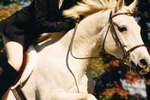
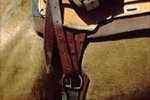
The tack store's filled with specialty items that serve to help you ride. The surfeit of available equipment can intimidate the novice horse rider trying to determine which items are necessary for riding and which ones you can go without. The specific tack you need can vary. Factors that matter include your experience level, your horse's level of training and the riding disciplines you want to do with him.
The Basic Equipment
Discipline and horse-specific needs notwithstanding, the average rider uses basic set of equipment: saddle, saddle pad, girth and bridle with reins. The saddle sits on the horse's back, on top of the saddle pad. They're secured by the girth. The bridle goes on the horse's head and serves to help you direct the horse in the way you want him to go.
English Versus Western
Riders typically use either English tack or Western tack, and don't mix the two. English riders outfit their horses in specifically English saddles, bridles, saddle pads and girths. Western riders use all the same items, but the overall design of the items is specialized to meet the requirements of Western riding disciplines. While Western and English tack items serve the same general purpose, they are shaped differently depending on which discipline they are intended for. A Western girth will not work with an English saddle, and vice versa.
Bridles
Bridles are among the most variable and complicated pieces of horse tack. A basic Western bridle is just a headstall, a bit and reins. The basic English bridle consists of a headstall, a bit, a noseband, a throatlatch and reins. A hackamore is a bridle without a bit; design differs between English and Western hackamores. The bits that go in your bridle are classified as English or Western. Some bits, such as the snaffle, are mixed-purpose.
Your bridle needs to meet the specific needs of your horse; some horses work better in one type of bit or bridle than they do in other types. One horse may work well in a full bridle, while another may prefer to go bit-less or in a simple headstall. Its possible to ride a well-trained horse completely without a bridle, the horse responding solely to cues that come from the rider's seat and legs, or bareback.
Additional Equipment
Hundreds of specialized pieces of equipment exist expressly for the purpose of improving individual horse or rider performance. A halter and lead rope allow you to tie the horse up or get off the saddle and lead the horse during a ride. A breast collar attaches to the front of the saddle and prevents it from slipping backward. A rear girth, or rear cinch, does the same thing at the back of a Western saddle. Protective boots help prevent a horse from injuring his legs during strenuous riding activities. A tie-down can help prevent a horse from tossing his head up in the air while being ridden. Draw reins, which are added onto the regular bridle, will help teach him how to carry himself under saddle. If your horse is struggling with a specific issue, it may be possible to find an extra piece of tack designed specifically to address that issue.
References
Photo Credits
-
Jupiterimages/Pixland/Getty Images
Writer Bio
Jen Davis has been writing since 2004. She has served as a newspaper reporter and her freelance articles have appeared in magazines such as "Horses Incorporated," "The Paisley Pony" and "Alabama Living." Davis earned her Bachelor of Arts in communication with a concentration in journalism from Berry College in Rome, Ga.