Things You'll Need
Bone meal, animal manure or rock phosphate
Rototiller or garden fork
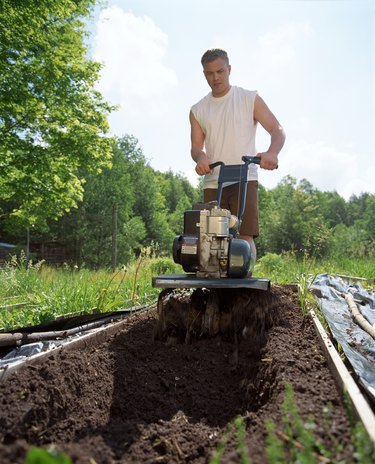
The middle number in a fertilizer, for example 15-20-15, represents the amount of phosphorus. Plants need phosphorus to stimulate root growth and to set flowers and fruits. Phosphorus deficiencies can occur in agricultural fields that are heavily farmed and are not as common in home gardens and urban landscapes.
Step 1
Send a sample of your soil to be tested by your county extension office before adding phosphorus, as too much phosphorus is worse than a deficiency. Follow the lab recommendations on how to improve your soil, including products and amounts.
Video of the Day
Step 2
Work a recommended product containing phosphorus -- which can be a fertilizer or organic material such as manure or bone meal -- into the soil as you till the garden in the spring or fall. Alternatively at other times of year, apply the recommended amount of product on top of the soil and work the product into the soil by hand, using a garden fork. Turn the topsoil under as you go.
Step 3
Broadcast products designed to be scattered on top of the soil for ease of use. These don't have to be worked in. If you choose this method, find a time when rain is not expected to decrease the chance of runoff.
Tip
Phosphorus is not very water soluble and takes time to break down enough for plants to use. Products containing rock phosphate take even longer, sometimes two to three years.
Warning
An overabundance of phosphorus can cause yellowing of leaves. Many gardeners incorrectly assume this yellowing is a nitrogen deficiency and add a large dose of all-purpose fertilizer, which adds even more phosphorus. Too much phosphorus harms beneficial fungi, leading to plant distress. Excess phosphorus can leech into groundwater, causing an upset in the balance of algae and bacteria. Certain towns and states regulate and in some cases ban the use of phosphorus in laundry detergent and lawn fertilizers due to problems from runoff.
Video of the Day