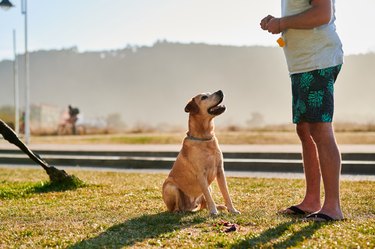
Do you clicker train your dog? A clicker is a tool used by dog trainers who prioritize positive reinforcement training methods for teaching new behaviors and rewarding desired behaviors. Clickers can be especially helpful for teaching a dog good behavior on walks. Dogs of all ages from puppies to older dogs and can benefit from clicker training. It can also help reduce confusion for dogs while they are training overall.
Video of the Day
Clickers are useful for teaching dogs new skills and reinforcing the desired behaviors they already know. This training can help you to communicate more clearly with your dog in the long term.
Video of the Day
Why clickers work for dogs
Clicker training isn't a training gimmick. Rather, it's a simple and effective way of telling your dog that they have done an action or behavior correctly. In addition, they become a secondary reinforcer. This means a dog understands that when they hear the clicker's click, a reward or treat is on the way.
When a dog's behavior is reinforced and rewarded they are more likely to repeat that behavior. With clicker training, it's much easier to mark specific movements or behaviors with the sound of the click, and then follow up with the food treat. Sometimes, it can be hard sometimes to get the treat to your dog at the exact moment they do the desired behavior. Though clickers streamline the communication between dogs and people — to help dogs learn faster.
Teach your dog clicker training step-by-step
Before you bring a clicker out on a walk with your dog it's important to make sure your dog understands the basics of clicker training. These step-by-step training tips can help make sure your dog understands the foundations.
Step 1
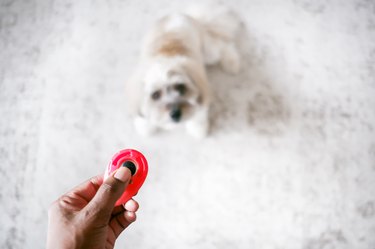
The first step of clicker training is to "charge" the clicker. Charging a clicker means introducing the clicker to your dog and building their sound association to mean treats are on the way. To do this, have a lot of small treats with your clicker. When you have your dog's attention click and then give your dog a treat. After a few repetitions, your dog will quickly begin to make the association.
Step 2
After several dog training sessions, ask your dog to do a simple behavior like "sit" or "lie down" using a verbal cue and/or hand signal that your dog knows well. When your dog sits do a click and treat. Repeat this several times.
Step 3
Next, continue to practice building your dog's understanding with the clicker by asking for a variety of known behavior cues. Continue clicking and treating your dog. Begin using the clicker to teach your dog new skills. Lure your dog with a treat into a new simple behavior. Then, click as soon as your dog does the behavior correctly.
Step 4
Now your dog understands the clicker as a secondary reinforcer. This means their association has been sucessfully exercised and established. Now it's time to bring your clicker on the road!
Marker words as clicker alternatives for your dog
If you find that using a clicker is uncomfortable, or if your dog has a negative reaction to the clicking sound (which can happen occasionally with very sound-sensitive dogs) you can also use a marker word instead. Pick a short word like "yes" that you can use in place of the clicker sound. If you're using a marker word, introduce it to your dog using the same above steps above — just as you would a clicker.
Using clickers in the real world with your dog
Many people are most familiar with clickers for teaching new behaviors when training. But, you can also use clicker training in the real world. You can use it to mark and reward all kinds of behavior in your dog's day-to-day life. For example, you can use a clicker to mark and reward your dog for responding to cues around the house or offering behaviors you want to encourage. This can range from behaviors such as relaxing on their bed to coming when called in the yard after going potty.
Clicking for better dog walks
If you're working with your dog on leash manners and loose leash walking, adding a clicker can be a helpful tool. It can help improve overall communication with your dog. When heading out on a walk, carry a treat pouch (make sure it's filled with lots of high-value training treats), and have your clicker at the ready.
While walking, instead of scolding your dog for pulling, or trying to hurry them along, mark and reward the behavior you want to see more of. Click for any behavior you like such as when your dog offers eye contact, or when your dog chooses to move close to you — or offers attention or engagement in any way.
In a distracting environment, clicker training can help keep your dog focused on you. By clicking and then treating your dog for these desirable behaviors they will learn paying attention gets them rewarded.
The bottom line
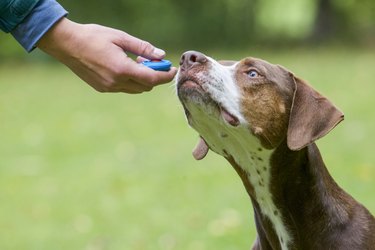
Clicker training is a fun way to increase your ability to clearly communicate with your dog while training. Clickers aren't just for teaching new tricks, they are another tool for helping to increase your dog's engagement with you while you both are out walking. Use a clicker to reward your dog for being near you, offering eye contact, and any other desirable behaviors your dog might offer while out walking. A clicker isn't a magic tool that will solve your dog's behavior. However, it is a great way to improve communication and help your dog to clearly understand loose leash walking, eye contact, and positive reinforcement. By following these tip,s your dog will be on their way to displaying behaviors that you would like to see more of.