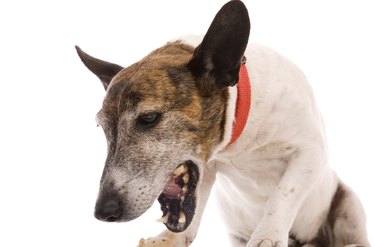
If your dog has recently spent time in boarding or has been participating in a dog training class or playgroup, you may think nothing of his occasional cough. If that cough becomes more persistent, then it's likely that your dog has contracted a case of kennel cough. This common and highly contagious infection is something that most dog owners will encounter at some point, so knowing how to handle it, and when to ask for antibiotics, will help your dog feel better faster.
1. Kennel cough is highly contagious
Video of the Day
Kennel cough is a viral infection that can be transmitted much in the same way that humans catch a cold. According to Pet MD, a variety of organisms, including Bordatella bronchiseptia and the Parinfluenza virus, irritate the lining of an infected dog's trachea. When a dog inhales the airborne organisms, they attach to the lining of her trachea. From there, they reproduce and cause an irritating infection.
Video of the Day
The virus is likely to be spread in situations where there are many dogs in an enclosed area, such as at a boarding facility, animal shelters, indoor dog shows, and training groups. It only takes a single infected dog to be present in order to spread this highly contagious disease.
2. Recognizable kennel cough symptoms
Signs of kennel cough include a persistent, dry, forceful cough that sometimes resemble a goose honk, explains Web MD. Sometimes dogs have other kennel cough symptoms, including a runny nose, eye discharge, and sneezing.
According to Pet MD, the cough generally first appears between three and seven days after the dog was exposed to other dogs. The cough is often aggravated by exercise, and the symptoms will last for seven to 21 days.
3. Treating kennel cough
If you think that your dog has kennel cough, keep him away from other dogs. Most dogs can recover from the virus within about three weeks on their own and won't necessarily require treatment, states Web MD. As your dog is recovering, keeping the air well-humidified and opting for a harness instead of a collar can help to keep your dog's coughing to a minimum.
4. Kennel cough antibiotics
While most vets let kennel cough cases just run their course, your vet may wish to prescribe antibiotics to treat the issue in some cases. According to The Whole Dog Journal, some vets prescribe antibiotics to treat the bacteria that caused the infection. However, antibiotics aren't effective against the viral side of a kennel cough case, so they will only treat part of the issue.
Your vet may or may not recommend a dog prescription cough medicine. If the coughing is severe, the cough medicine can help to reduce your dog's throat irritation. However, some vets feel that cough medicine weakens the immune system and try to avoid giving it unless absolutely necessary.
5. Other coughing illnesses
It's always a good idea to have your dog seen by the vet, even if you suspect a minor case of kennel cough. Kennel cough symptoms can mimic symptoms of more serious conditions. Pet MD notes that other respiratory diseases including Valley Fever, blastomycosis, heartworms, and cardiac disease can all cause a dog to cough.
6. Kennel cough vaccine
Kennel cough vaccines are available in different forms, including a nasal mist, injection, and a vaccine that is given orally, according to Web MD. While the vaccines can offer your dog additional protection against kennel cough, they aren't 100 percent effective against infection because there are many different kinds of bacteria and viruses that can cause kennel cough.
7. Preventing kennel cough
Vaccinating your dog is the first step in preventing kennel cough. You can also keep your dog away from situations where kennel cough is often transmitted, such as by hiring a pet sitter rather than boarding your dog. If your dog is in a situation where he meets other dogs in close quarters, rigorous disinfection of cages, kennels, bowls, and other items can help reduce the chance of him contracting kennel cough.
Always check with your veterinarian before changing your pet’s diet, medication, or physical activity routines. This information is not a substitute for a vet’s opinion.