Things You'll Need:
- Screwdriver
- Plastic bag
- Sandpaper, fine and medium
- Water
- Denatured alcohol, optional
- Rubber gloves, optional
- Sponge or rag
- Drop cloth
- Primer, water or oil based
- Disposable foam brushes
- Paint
- Paint roller
- Pain brushes
-
Step 1
Remove cabinets with a screwdriver and place hinges and screws in a plastic bag. If you plan to purchase new hinges, keep at least one for future reference.
-
Step 2
Take off all knobs and pulls and place in a plastic bag for safekeeping. An electric screwdriver will save time and energy when removing cabinets and hardware.
-
Step 3
Sand cabinets to remove finish. Paint will not stick to smooth or glossy areas, so be sure to sand evenly and thoroughly. Always sand in the direction of the wood grain to avoid scratches.
-
Step 4
Clean cabinets with a sponge or rag and warm water. Paint won't adhere to dust, so wipe all areas well. Wipe cabinets dry before painting. You can also use denatured alcohol to clean cabinets, but you must do so in a well-ventilated area. Wear rubber gloves when applying.
-
Step 1
Lay the drop cloth in your work area and begin priming the cabinets. Prime cabinets with a disposable foam brush. Apply 2 or 3 coats of primer, always painting in the direction of the wood grain. Allow primer to dry overnight.
-
Step 2
Paint wood cabinets in the direction of the grain. Use a paint roller to cover large, flat surfaces and a brush for grooves and crevices. Apply at least 2 coats and do any required touch up work.
-
Step 3
Repeat Steps Two through Four on the cabinet bases and drawers. Allow cabinets, bases and drawers to dry for at least 2 full days before reinstallation.
-
Step 4
Purchase new hardware or clean old hardware with mild soap and warm water. Attach knobs and pulls only when paint is completely dry.
-
Step 5
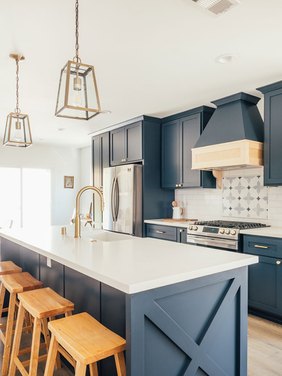
Reinstall cabinets and enjoy your home's new look.