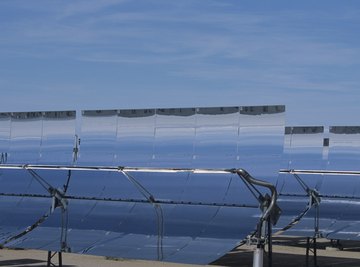

The search for clean energy has made solar power one of the fastest growing power generation technologies in the world. Germany, in particular, has embraced solar generation, producing as much as 5 percent of the country’s electricity from the sun. While solar offers considerable benefits, the myths and misconceptions about the technology can cloud its true potential.
Solar Requires Lots of Sunlight
While solar panels work best when they receive as much intense solar energy as possible, the technology depends on ultraviolet radiation and therefore can even generate some power in cloudy conditions. On average, most of the United States receives more intense sunlight on a yearly basis than anywhere in Germany, and that country’s solar industry is booming. While the Mojave Desert remains the best option for solar generation in America, the technology can produce emissions-free energy anywhere in the country.
Solar Panels Don't Pay for Themselves
While the initial outlay for a solar installation can be expensive, especially if you are trying to run your entire household on solar electricity, it is important to consider the long-term picture. Most solar panels come with a 20- or 25-year warranty, and the panels themselves may last four decades or more. This gives a solar panel plenty of time to pay for itself through energy savings, and with rising energy costs the payoff time becomes shorter and shorter. When you take credits and incentives for adopting solar power into consideration, the savings offered by a moderate solar installation may pay for themselves in as little as five to seven years.
Solar Panels Are Completely Green
While solar electricity generation produces no emissions, the panels do require considerable energy to create and involve the use of some toxic substances. Solar panel production uses gases like nitrogen trifluoride and sulfur hexafluoride, two of the most potent greenhouse gases in the world. In addition, the solar panel industry used more energy than the panels themselves produced until 2010, making solar a net energy consumer rather than a producer. The difference between solar generation and fossil fuel generation on the environment is significant, however, and the increased generation of solar electricity is on schedule to pay off the industry’s net energy debt by 2020. As the solar electricity industry matures, its effect on the environment is likely to improve further.
Solar Will Make My Home Energy Independent
While it is true that under some circumstances you can run a household off solar panels, it is a tricky proposition. High-current appliances such as heaters, air conditioners or ovens would overwhelm most solar installations, even those with extensive battery storage systems, so most households that adopt solar retain a tie to the local electrical grid. This tie has its benefits, as you can sell energy back to the electrical system when you use less than you produce, but it also means that during a blackout, your system will disable itself in order to avoid sending potentially lethal electricity back into the grid while workers fix the problem.
References
- Solar Energy World: Myths & Facts of Solar Power
- Media Matters: Myths and Facts About Solar Energy
- Realtor.com: 5 Myths About Solar Panels
- NWI: Five Common Myths About Solar Energy for the Home
- Popular Science: Solar Panels Now Make More Electricity Than They Use
- Vocie of San Diego: The Not-So-Sunny Side of Solar Panels
About the Author
Milton Kazmeyer has worked in the insurance, financial and manufacturing fields and also served as a federal contractor. He began his writing career in 2007 and now works full-time as a writer and transcriptionist. His primary fields of expertise include computers, astronomy, alternative energy sources and the environment.
Photo Credits
Tom Brakefield/Stockbyte/Getty Images