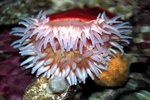
Approximately 90 percent of the ocean belongs to the midnight zone, according to MBG Net. The midnight zone is commonly referred to as the aphotic zone because it is entirely dark. In addition, the water pressure is extremely high and temperatures are close to freezing. The midnight zone is also called the bathypelagic zone. Bioluminescence is extremely common in the midnight zone.
Bacteria
Bacteria live in the midnight zone that are capable of using hydrogen sulfide to produce food. Hydrogen sulfide is released from cracks in the Earth’s crust in the midnight zone along with other minerals. All other organisms that live in the midnight zone receive nourishment by eating these bacteria.
Bivalves
Bivalves have soft bodies covered by two hard shells hinged together. Examples of bivalves include oysters, scallops and clams. Crustaceans are a group of organisms in the midnight zone that have a hard exoskeleton, segmented body and jointed legs. Examples of crustaceans include lobsters and krill. There are more than 30,500 different species of crustaceans.
Sharks
The luminous shark is found in the midnight zone and emits a green luminous glow from its belly, according to EnchantedLearning.com. The luminous shark grows to approximately 20 inches in length and uses its green luminous glow to attract its prey in the darkness of the midnight zone. The Greenland shark is another species of shark that lives in the midnight zone. Greenland shark swim extremely slowly and have eyes that glow in the dark.
Eels & Viperfish
There are approximately 500 different species of eels in the world and some live in the midnight zone. The gulper eel is capable of swallowing fish larger than its body because it has an elastic stomach. Viperfish are also found in the midnight zone and have long teeth that reside outside of the mouth even when the mouth is closed.
Giant Squid
Giant squid are also found in the midnight zone, but they are so rare that only dead fossils of giant squid have been found. The largest giant squid ever found was 57-feet long. These creatures have eight arms and two eyes that are approximately the size of a basketball.
References
Resources
Photo Credits
-
Jupiterimages/Photos.com/Getty Images
Writer Bio
Laurence Girard has been writing professionally since 2006. Girard is currently a pre-med student at the Harvard University Extension School.