Things You'll Need
Needle nose pliers
E6000 or industrial strength glue
Matching abalone discs, pre-drilled (2 per pair of earrings)
Hypoallergenic silver plated earring hooks, (2 per pair of earrings)
Small jump rings, silver color, (2 per earring)
Tumbled & polished 2-inch abalone piece or round cabochon (1 per pendant)
Small to medium (glue on) silver plated bale (1 per pendant)
Tumbled & polished 1/2-inch abalone pieces (10-12 per bracelet)
Silver plated form bracelet (round or square forms, 1 per bracelet)
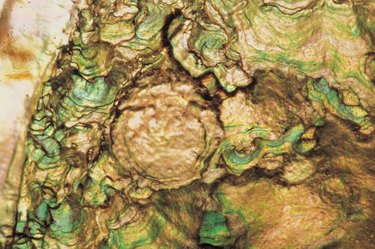
Abalone shell jewelry is beautiful and can be expensive to buy. Often inlaid into jewelry, buttons and musical instruments, the pearly iridescent part of this sea shell is stunning. Found in many areas of the world, California boasts a special history with the abalone, dating to the Chumash Indian tribe having once traded abalone as a form of money. It should be noted that the dust from the abalone shell is toxic to humans and animals, so it is important to use pre-drilled discs unless you are a trained professional. Making basic jewelry can be easy, and inexpensive.
Tip
If these supplies can't be found in the local craft store, you can order online.
Warning
Do not under any circumstance attempt to grind, sand, tumble, drill, or create any type of dust from these shells on your own, as the "abalone dust" is considered toxic. This is why most craft stores and wholesales offer pre-drilled discs and pre-tumbled pieces. Unless you are a trained professional with required lapidary equipment and respirator, do not attempt to do this on your own.
Video of the Day