How to Grow a Littleleaf Linden Tree

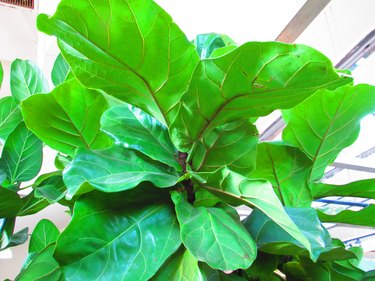
As a rule, shade trees don't have very interesting flowers or a scent. But, the hardy littleleaf linden (Tilia cordata) is the exception to the rule. Glossy, dark green heart-shaped leaves appear in spring, followed in June by small yellow-green flowers. The flowers are humble, but the fragrance will fill the air. Follow these easy steps to enjoy a littleleaf linden in your garden. Does this Spark an idea?

Things You'll Need

  • Littleleaf Linden tree
  • Shovel
  • Knife or garden shears
  • Water
  • Mulch or other organic material
Show More

Instructions

    • 1

      Select a planting site. The littleleaf linden prefers moist, well drained soil but can tolerate compacted soil. Acidic or alkaline soil is acceptable. The tree should be planted in a site that receives full sun.

    • 2

      Prepare the linden for planting. The littleleaf linden is usually purchased as balled-and-burlapped specimens. Remove any twine or wire and half of the burlap covering the root ball with a knife or shears.

    • 3

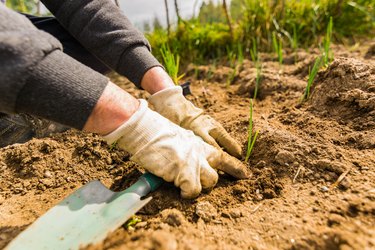
      Dig the planting hole at least 4 times the width of the tree's root ball. The hole depth should be equal to the height of the root ball so that when the tree is placed in the hole the root ball will be even with the surrounding ground.

    • 4

      Position the littleleaf linden in the planting hole. Backfill a small portion of the original soil to keep plant erect. Fill planting hole with water, and allow it to be absorbed by the soil and root ball. Fill the planting hole with the remaining soil, and water again deeply. This step provides additional moisture and helps eliminate air pockets from the soil.

    • 5

      Spread a layer of mulch 2 to 4 inches deep around the base of the tree and over the entire planting site. Care should be given not to pile the mulch too high on the trunk.

Tips & Warnings

  • The littleleaf linden is a deciduous broadleaf tree that will grow well in hardiness zones 3 through 8. Check the USDA Hardiness Zone map for your zone.

  • The littleleaf linden requires regular watering of 1 1/2 inches of water per week. Soaker hoses are a useful tool with this tree particularly during times of drought. Be sure to give it a good soaking in late fall, just before the ground freezes.

  • Fertilize in early November. The littleleaf linden benefits from and will grow more rapidly from regular fertilization during the first 5 to 10 years after planting.

  • This linden requires little pruning. Remove dead branches and maintain shape. The littleleaf is, however, an excellent hedge tree and can be successfully sheared for the formal garden.

  • The littleleaf linden grows 60 to 80 feet in height and 30 to 40 feet wide. It has a dense, pyramidal canopy that makes it an excellent shade tree.

  • Unfortunately, the littleleaf linden is a favorite snack of the Japanese beetle. The pest causes the leaves to look unsightly, but rarely does any real harm to the tree. Use an insecticide or knock the beetles off the leaves into a pan of boiling water. Aphids can also be a problem for the tree.

Related Searches:

Comments

You May Also Like

  • How to Identify the American Linden Leaf

    When the American linden is in bloom, you don't need your eyes to identify this native North American tree. The multitude of...

  • Linden Tree Varieties

    Linden Tree Varieties. Linden tree (Tilia) is a popular urban landscape tree and referred to as lime tree and basswood tree. The...

  • Linden Tree Identification

    The three North American Trees commonly known as Linden trees are the American basswood, the littleleaf linden, and the silver linden. These...

  • Linden Tree Disease

    An outbreak of powdery mildew causes a linden tree to develop small white dots over its bark, leaves and shoots. Wet weather...

  • How to Grow Linden Trees

    Lindens are selected as garden and landscaping trees because of their hardy nature. They are easy to plant and require minimal care...

  • Linden Tree Facts

    Linden trees, also known as bee trees and basswood trees, are large trees that grow in four-season climates all over the world....

  • How to Plant a Linden Tree

    The Linden tree is a fast-growing species that can reach a height of 50 to 70 feet, with a width of 40...

  • Information on the Little Linden Tree

    The little linden or littleleaf linden is a large tree used for decorative landscaping purposes. In the springtime, it produces tiny, sweet-smelling...

  • How to Buy a Linden Tree

    The Linden tree (Tilia cordata) also known as littleleaf or basswood, is a highly prized ornamental tree used in landscapes in United...

  • Types of Linden Trees

    Linden trees, sometimes called lime trees or basswood, are deciduous broadleafs with a pyramidal shape that eventually becomes an oval canopy. They...

  • How to Propagate Linden From Cuttings

    Linden is a tall shrub or tree, usually growing 10 feet or fewer in height. Small clusters of white flowers grow on...

  • Where Does a Linden Tree Grow?

    The linden tree belongs to the genus Tilia and includes 45 distinct tree species native to the forested regions of Europe, Asia...

  • American Linden Tree Facts

    American Linden (Tilia americana) trees are also commonly referred to as basswood trees. This tree is native to North America and commonly...

  • How to Care for a Linden Tree

    Linden trees, also known as lime trees or basewood, are very popular in urban landscapes, because of their hardiness, resistance to pests...

  • How to Grow Lemon Trees

    If you plant, remembering to water and fertilize your lemon trees with care is not only crucial but will help result in...

  • Linden Tree Description

    Linden trees are also known as lime trees and basswood trees, and they are often planted in urban landscapes. They are hardy...

  • Linden Tree Growth

    The linden, also called basswood or honey tree, is an important timber tree in the United States. Its soft wood is used...

Related Ads

Featured