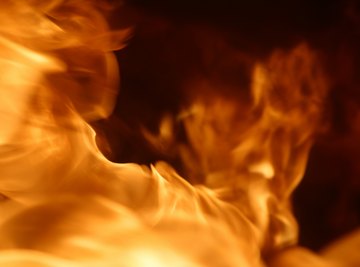

The term “gas leak explosion” refers to unwanted explosions caused by the mechanical failure of something containing the gas. Every once in awhile, a container with a hydrocarbon fuel develops a leak. Under certain conditions, these fuels may create fumes that ignite, causing fires and explosions that lead to damaged property, injury and even death..
Compromised Container
Various containers and pipelines hold both natural gas and liquid fuels that release explosive fumes. These containers can become damaged and leak out hydrocarbon fuels. Containers gradually corrode and puncture the containers, leading to holes through which gas can leak.
Ignition
Other factors, such as the blunt impact of one object into the container, can cut the structural integrity of the container. For example, someone might drive a car into a gas pipeline, warping the pipe and creating a hole where gas can escape. Instead of continuing its journey through the pipe, the gas escapes through the hole. After a gas leak and explosion, specialists usually study the container and create mathematical models to determine why the gas leak and explosion occurred.
Ignition
A spark can ignite gas leaks. For example, cooking equipment, such as a natural gas stove, uses a spark to set the natural gas ablaze. If the room is full of gas, the spark can ignite the gas. Smoking can be another source of ignition, with the burning tip of the cigarette generating enough heat to ignite the gas.When gas ignites immediately due to a spark or fire, the gas creates a fire that consumes it. However, when the gas does not ignite, a combustible fuel-air cloud forms. Something causes the gas pressure to increase suddenly, leading to the explosion, often a spark or fire that ignites the gas. Some gas explosions are minor, with the increase in pressure not generating enough force to damage anything, while other gas explosions can cause injury or damage to property. Gas explosions can lead to fires. When nothing ignites the gas cloud, it will eventually dissipate. The power of the gas explosion depends on the type of fuel, the fuel concentration, where the fuel ignites, the ignition strength, the location of vents and the structure of the container.
Confinement
Gases are compressible fluids that have widely spread out molecules. The damage caused by the gas explosion depends on the side of the area where the gas is confined and how much gas is in the container. In open space, the gas can expand out and dilute. However, in a confined space, the pressure can build up and damage the containing structure. For example, someone can have a cylinder containing combustible gases. The cylinder might develop a leak and fill the garage with gas. Confinement increases the temperature generated by the gas explosion. Larger concentrations of combustible gas lead to more energy released, which increases the temperature and burns more heat in a continuous cycle until the fuel runs out.
References
About the Author
Chuck Robert specializes in nutrition, marketing, nonprofit organizations and travel. He has been writing since 2007, serving as a ghostwriter and contributing to online publications. Robert holds a Master of Arts with a dual specialization in literature and composition from Purdue University.
Photo Credits
Jupiterimages/Photos.com/Getty Images