
NSA & ASA Softball Rules
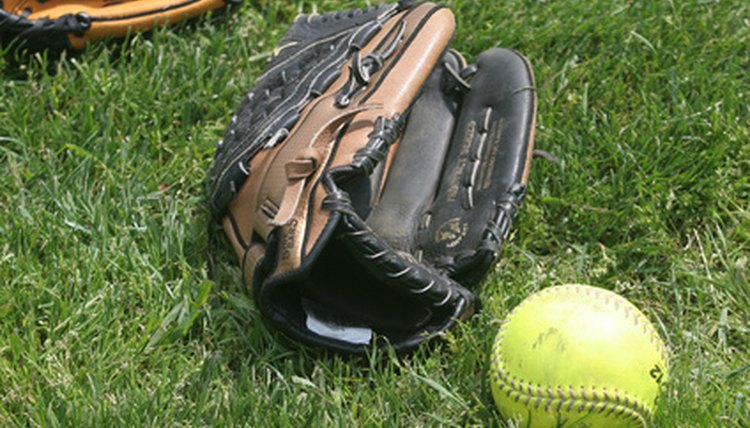
Softball leagues around the United States offer teams for both genders, from children to seniors. Several organizations oversee softball leagues, including the Amateur Softball Association of America and the National Softball Association. The nonprofit ASA, founded in 1933 in Oklahoma City, Oklahoma, serves as the national governing body for softball and employs volunteer workers, while the NSA is a full-service, for-profit organization launched in 1982 in Lexington, Kentucky. While many of the basic rules of softball apply in both organizations, each has its own standards and rules, which differ on some points.
Base Distance
The ASA uses a base distance of 65 feet and the NSA uses a base distance of 70 feet. The shorter distance in ASA gives batters an advantage when trying to hustle and turn a ground ball into an infield single.
Pitcher's Mound Distance
In ASA, the pitcher's mound sits 50 feet away from home plate, while the NSA puts the pitcher's mound 3 feet further away. In fast-pitch softball, the shorter distance in ASA gives the pitcher a decided advantage--batters have less time to see the ball, forcing them to rely on quick reactions and a little luck.
Pitching Arc
The NSA requires a pitching arc between 6 feet and 10 feet above the ground. The ASA allows for a pitching arc between 6 feet and 12 feet, giving pitchers more flexibility and increased angles that provide an advantage over batters.
Mercy Rule
Both the NSA and the ASA allow for the ending of a game before its allotted number of innings if one team has a large lead over its opponent. In the ASA, the game ends if one team leads by 15 runs after three innings, 12 runs after four innings or eight runs after five innings. The NSA allows for a game to end if one team holds a lead of 12 runs after three innings, 10 runs after four innings or eight runs after five innings.
References
Writer Bio
Tim Busbey has been a professional writer since 1996. He has experience in the newspaper industry and marketing/advertising. Busbey's work has appeared in "The Ashland Times-Gazette" and online. He currently serves as a writer for a Cleveland-based law firm. Busbey has a Bachelor of Arts in journalism from Bowling Green State University in Bowling Green, Ohio.