Difficulty: Moderately Easy
Step1
Picking your plants!
The Lavender plants you pick depend on your climate. English Lavender, (Lavandula angustifolia), is the most hardy plant and grown the most widely. It is easy to mix in a perennial bed. This plant will endure subzero winters, but dislikes humid heat. If you live in a humid climate look for a LavanDIN instead of lavender. "Grosso and Provence" are the best lavandins. You can even chose your hue of lavender, but unless you get shoots from a "mother" plant, you will not have a consistent color or flower.
Step2
Picking your spot to plant!
The most important factor about Lavender is drainage. Soggy areas should definitely be avoided. Incorporate organic matter if necessary to make a loose soil for easy drainage.
Lavender prefers a sloping bed in a sunny spot. A solution to that would be to heap soil in a pile about 12 to 18 inches high before planting the lavender. If your soil is mostly clay soil, dig out your hole and mix the clay with sand. Lavender plants cannot compete with aggressive weeds, so ensure your chosen spot is weed free. This is most important if you are planting a hedge of lavender, as weeding after they are planted can be a huge hassle. Weeding often becomes such a chore that Lavenders are overrun and eventually dies in a neglected hedge.
Step3
Planting:
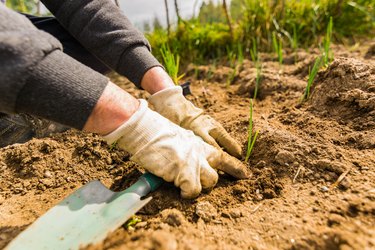
When planting lavender place the plants at least 2 feet apart. Start with 4-inch-pot sized plants. Leave plenty of room between plants for air circulation. If planting in pots, make sure to repot every spring into a larger container with fresh soil to allow the plant to continue to mature. A good, coarse, sterile potting soil with organic fertilizers works best.
Step4
Watering:
Lavender does not like overhead sprinkler and could rot if they get too much water. Use a drip irrigation and water only when the bed is dry to a depth of 3 or 4 inches. While Lavender is extremely drought resistant once established, it grows larger and produces more blooms with regular watering. It is important to let the plant dry out a bit before soaking it again. In humid areas, this can be difficult and the excess moisture often causes death by rotting. Do not mulch lavender! It holds too m uch moisture.
Step5
Fertilizer:
Wait about two years to fertilize the plants and then use an organic product such as fish emulsion. Feed the plants in spring when they start growing and again after harvesting in late summer. If you grow plants as annuals, you don't have to feed them at all.
Step6
Pruning and Harvesting:
It takes about three years for Lavender to reach full size. Plants should be pruned every year immediately after bloom. Pruning should not be confused with harvesting. Pruning is necessary to extend the life of the plant because lavender gets very woody if not pruned. Lavender flower wand stems are a bright green and Lavender leaves are gray. Cut back not only the flower stem, but also about a third of the gray-leaved stems as well. Avoid pruning back so far that only woody stems with no leaves are showing as it may die.
Harvest the flowers according to end use. For a fresh bouquet pick when the flowers are in full bloom and scent. For dried bundles the stem must be harvested before the florets completely open. If you wait until the flower is open it will fall apart when they are dried. Take a handful of stems and cut them off at the base of the plant and then wrap rubber bands around them. To dry them hang them upside down. Drying takes about two weeks, but keep good circulation around your bundles to avoid them falling part or rotting. Harvesting the lavender for oil must be done at the peak of the day's heat. Essential oil can be extracted by steam distillation from the fresh flowers.
Comments
Time2Compose said
on 1/21/2008 Hi KCout, I have tried so hard to grow lavender from seeds because you just can't get plants in United Arab Emirates. Any suggestions for growing from seeds? Each time they begin to sprout and then it is as if they just rot. I really want lavender in my house. The smell is truly heavenly.