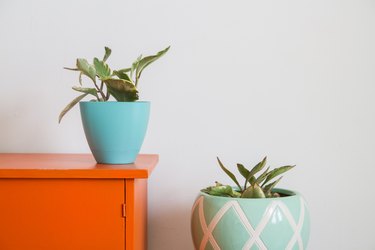
You're not likely to find more than a handful of the more than 1,000 species of Peperomia at a nursery or garden center, including marble peperomia (Peperomia obtusifolia) and watermelon peperomia (Peperomia argyreia). They are handsome, adaptable plants grown for their showy leaves and tolerance for low light. Peperomia plants thrive despite neglect and will live for six or more years if grown under the right conditions. A little routine care year-round will help them look better and live a longer, healthier life.
Water Requirements
Video of the Day
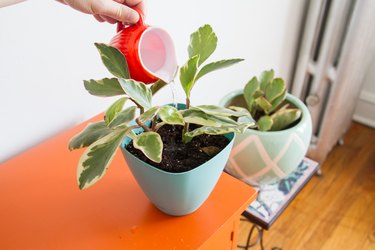
Peperomias need consistent moisture to maintain normal, healthy leaf growth, although water needs vary by season. Water the plants deeply but infrequently during the spring and summer, saturating the soil and then letting the top 1/2 inch dry out completely before watering again. Reduce watering by one-half in fall and winter when the weather is cool and growth is slow. Over time, potted peperomia plants may develop a crust of salt on the surface of their soil. Flush the soil with fresh water once or twice each summer to prevent salt buildup.
Video of the Day
Fertilizer Needs
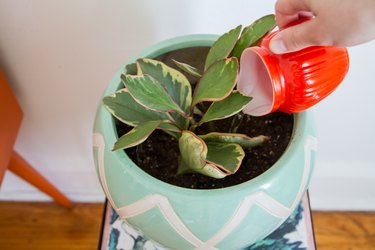
Established peperomia plants require light to moderate feeding to support their growth. Use a balanced houseplant fertilizer with an N-P-K analysis of 20-20-20 applied at one-half the recommended strength. Add 1/2 teaspoon of fertilizer to 1 gallon of water, shaking it gently so it dissolves fully. Water with the solution every two weeks during the spring and summer, reducing this to once a month in fall and winter. Don't fertilize garden-grown peperomias in fall and winter. To avoid root and foliage damage, apply the fertilizer to moist soil and avoid splashing it onto the leaves.
Pruning and Grooming
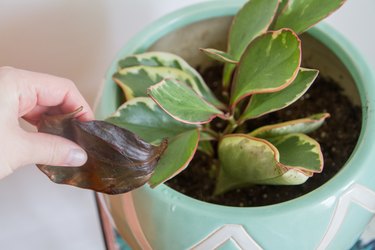
New and established peperomia plants benefit from annual light pruning to correct any leggy, sparse growth. Pinching back the stems in early spring will help maximize the lush appearance by encouraging more branching. Remove the end of each stem and the first set of leaves, pinching them off between your fingernails. Garden-grown peperomia plants may be too large to pinch back by hand, so remove unwanted growth with pruning shears. Before pruning, soak the pruning shear blades in undiluted household disinfectant cleaner for five minutes to eliminate any harmful pathogens, then rinse them thoroughly and wipe them dry.
Potential Problems
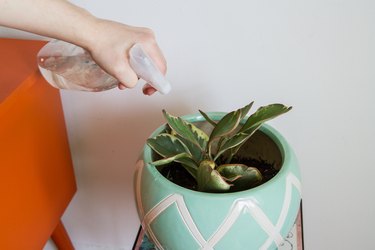
Peperomia plants suffer few serious problems if grown in the right conditions with the correct care, although some may attract mealybugs. The most obvious sign of a mealybug infestation is a white, cottony matter on the stems and leaves. If you see only a few mealybugs, remove them with a cotton swab dipped in rubbing alcohol. For a larger mealybug problem, mix 4 teaspoons of insecticidal soap in 1 quart of fresh water. Pour the solution into a spray bottle, and spray to saturate the cottony matter and any visible mealybugs. Rinse off the solution with cool water two hours after each treatment and reapply it at four- to seven-day intervals until the problem subsides.
Overwintering Tips
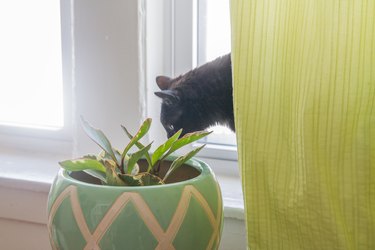
Tropical peperomias will only grow outdoors year-round in warm climates. Marble peperomia grows in U.S. Department of Agriculture plant hardiness zones 10 through 11, while watermelon peperomia grows in USDA zones 10 through 12. Outside their preferred climate range, grow peperomias in pots and move them indoors for winter. Choose a cool, bright room where temperatures stay above 65 degrees Fahrenheit at night. Position peperomia plants away from heater vents and cold drafts to prevent damage and water only when their soil dries out completely. In late spring, move the plant outdoors to a sheltered, lightly shaded area and resume normal feeding and watering. Always use pots with drainage holes for peperomias.