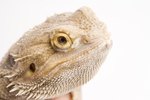
Bearded dragons who fail to grow and put on weight can trouble new keepers. As young bearded dragons grow primarily in length before adding weight, patience may be all you need to see weight gain. However, slow weight gain can be a symptom of an underlying health problem. If you are concerned about your bearded’s weight, review your husbandry and visit your veterinarian to ensure that your pet is healthy. Once you're sure she is in good health, you can feed her supercharged food to get her nice and plump.
Wait for the Weight
Your young bearded dragon will quickly put on length but will begin bulking up only as she reaches sexual maturity. Until mature, young bearded dragons allocate surplus calories into length rather than into fat production. As long as your bearded dragon’s hips are not obvious -- a sign of low body fat -- you needn’t worry about her weight. You can record and track your bearded's weight with a small digital scale to be sure she is gaining.
Home-Cooked Husbandry
Review your husbandry any time a captive reptile exhibits health problems, including slow weight gain. Ensure that your bearded dragon’s cage is clean, well-lit and properly heated. Even if your lizard is healthy, and you are just trying to increase the rate of weight gain, begin by ensuring that all husbandry parameters are ideal.
Intestinal Investigations
Parasites can prevent your bearded dragon from gaining weight. If your bearded dragon is battling high parasite loads, not only will she have to divert resources away from her growth, but the parasites will steal some of her calories, too. Visit your veterinarian to make sure your lizard's is the only mouth you are feeding. The vet may test your lizard’s blood to ensure she is not otherwise ill, since metabolic bone disease, respiratory infections and other health problems can cause slow growth or weight gain.
Feed Her Fat
Feeder insects are not all created the same; each insect species has a different nutritional makeup. While the domestic cricket is a fine staple for your bearded dragon, if she's thin, she will benefit from insects with a higher fat content. Mealworms, superworms and waxworms all possess a higher percentage of fat than crickets and roaches do. Some bearded dragon keepers offer thin bearded dragons thawed frozen pinky or hopper mice, but be cautious -- while your pet can likely handle the occasional pinky or hopper mouse, feeding her too many will result in health problems.
You Are What Your Food Eats
When your bearded dragon eats an insect, she is also eating whatever food was in the insect’s gut at the time. Take advantage of this by gut-loading your feeder insects with high-quality food before offering them to your bearded dragon. Carrots, collard greens, squash and parsley are excellent sources of vitamins and water; while lab chow or grains provide a good source of protein.
Proper Proportions of Prey
While it is important to offer your bearded vegetables -- such as chopped collard greens, squash, parsley and shredded carrots -- each morning, insect prey causes more rapid weight gain. While you can maintain an adult with five to six weekly insect meals, twice- or three-times-daily meals offered seven days a week promotes quicker weight gain or growth for a young or underweight animal. Offer your lizard as many insects as she will consume in about 10 minutes -- usually one to two dozen, depending on the size of the insects. Feed your bearded dragon insects that are no longer than the distance between her eyes; insects that are too large can seriously injure your lizard.
References
Resources
Photo Credits
-
Hemera Technologies/AbleStock.com/Getty Images