Things You'll Need:
- Tomato
- Water
- Plastic Wrap
- Glass
- Spoon
- Paring Knife
- Fine mesh sieve
- Paper plate
- Small envelopes (paper is best!)
-
Step 1
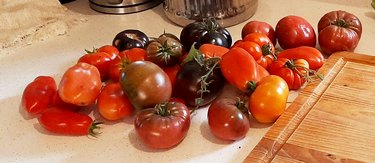
Find that perfect tomato! This is a brandywine, an heirloom that I am particularly fond of.
-
Step 2
Cut the tomato in half, across the tomato, like this. This is the inside of a brandywine, note the lack of pith, they are a great tomato but you won't get as many seeds (worth the effort!). This photo is by Laurel Garza: Owner, Laurel's Heirloom Tomato Plants (look them up!). She told me they forgot to save these seeds, after this pic was taken...they couldn't help but eat it...yes, that is how good a brandywine is!
-
Step 3
Scoop out the seeds and goo with either your finger or a spoon and put them in a glass.
-
Step 4
Add a bit of water and give it a stir.
-
Step 5
Now you want to cover the top of the glass with plastic wrap. Put a small hole in it to promote air flow, a paring knife works great! This helps them ferment, that will give you the separation you will need.
-
Step 6
Put this glass of seed stuff/water on top of the fridge or in a sunny window.
-
Step 7
The process of ferment/separation takes about 2-3 days so every night take off the plastic wrap and give the mix a stir, if you use new wrap DON'T forget the hole!
-
Step 8
The top of the water will look "scummy" when the fermentation process has removed the goop from the seeds. It also helps destroy many of the tomato diseases that can be harbored by seeds.
-
Step 9
Take a spoon and carefully scoop the goop/scum off and discard it.
-
Step 10
Dump the rest in a fine meshed sieve and carefully rinse. Stir while rinsing, carefully with your finger to remove any bits of pulp that may still be attached. Tap the sieve against the sink a couple times to help get rid of any water left.
-
Step 11
Spread them out in a single layer on a paper plate.
-
Step 12
Set them somewhere safe, such as a nice unused cupboard area.
-
Step 13
Stir them around every day. Make sure to spread them out in a single layer again! They can take a week or more to dry.
-
Step 14
If you use paper envelopes to hold them you have a bit of leeway but if you are using plastic envelopes they have to be DRY or you will have useless, moldy seeds!
-
Step 15
Save till next year, share with family and friends and grow them yourself!


Comments
joni04 said
on 4/2/2009 Great tips! Very economical!
SunflowerOcity said
on 10/19/2007 Good Stuff! See also: http://www.ehow.com/how_2072296_save-seeds-easy-way.html