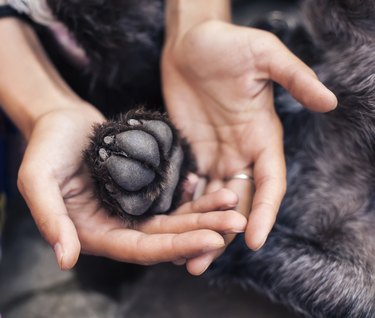
A dog's paws bear the brunt of his busy life, carrying him across streets and lawns, chasing toys, digging, exploring and aiding in his escape from confinement. As such, the paws are exposed to a variety of hazards along the way. Medical ailments or allergies can compound existing paw problems. If your dog has a swollen paw or shows signs of lameness, carefully examine the affected foot or feet to determine the root cause, which will dictate his treatment. As with any medical issue or injury, seek the advice of a veterinarian.
Road Hazard Assistance
Video of the Day
As your dog goes about his busy day, he may have picked up a thorn, burr, insect bite or bee sting on his paw or between his toes. Usually only one foot is affected, and you'll notice him limping or favoring the paw, or holding it up when he's standing. Examine the wounded paw carefully, checking between the toes as well as on the top and bottom of the foot. Remove any thorns, rocks or other foreign objects with sterile tweezers. Soak the foot in a water and Betadine solution to disinfect the foot, or moisten gauze pads with the solution and apply them to the foot. If your pet has an insect bite and shows signs of allergic reaction, such as labored breathing or hives, take him to the veterinarian immediately.
Video of the Day
Bandaging Broken Toes
Trauma, such as a heavy object falling on your dog's paw or catching a claw in a fence, can cause a fractured or broken toe. The toenail may be crushed or broken at the base of the nail. In an instance, take your dog to the veterinarian for examination. She may choose to X-ray the paw to determine the extent of the injury and to determine the best course of treatment.
Infectious Disease of the Digits
If your dog has a bacterial, fungal or parasitic infection of the foot, redness, swelling, ulcers or lesions may appear. He may lick the paw frequently and may lose some of the hair on the paw. Soak the affected foot in a water and Betadine solution, or add a half-cup of white vinegar to a gallon of water as a disinfectant foot soak.
Allergic, Itchy Paws
Dietary, seasonal and environmental allergens can cause your dog's paws to swell. Saliva from constant chewing on the paws may stain his paw fur. The condition may involve the entire foot or just the bottoms of the feet, depending on the cause. Your veterinarian will want to know what diet your dog eats, whether the symptoms persist year-round or only seasonally, and whether your dog has traveled outside his usual environment. Treatment may include dietary changes and reduced exposure to environmental irritants.
Medical Maladies Affecting Feet
Other causes of irritated or swollen paws include immune disorders, hormonal imbalances, metabolic diseases such as Cushing's, or tumors. If an underlying medical problem appears to be the source of your dog's digital discomfort, your veterinarian will need to perform a thorough examination to narrow down the cause and determine appropriate treatment.
Always check with your veterinarian before changing your pet’s diet, medication, or physical activity routines. This information is not a substitute for a vet’s opinion.