

How to Paint Leopard Spots

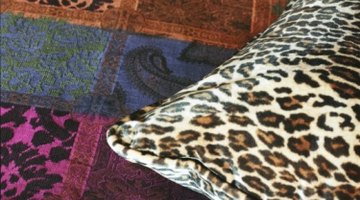
You can use a leopard print to decorate just about anything, from clothes to baby nurseries. Leopard print is a fun and edgy design that can turn an ordinary piece of furniture or wall into one that exudes style and drama.
Things You Will Need
- Repeating pattern stencil
- Paint brushes
- Paint
- Sea sponges
- Scissors
Although you can cover most objects with leopard-print fabric, you can also paint the spots yourself. Painting is also advantageous for larger areas or those that will not accept a piece of fabric over them. There are a variety of techniques you can use to add leopard spots to your décor.
-
Purchase a repeating pattern stencil of leopard prints at an art or craft store. Use black or dark brown paint to create the outline of the spot; make the border as thick or as thin as you want. Use a lighter color, such as tan or light brown, to fill in the centers of the spots. You could also use one color for the spots if you prefer.
-
Cut a sea sponge to create the leopard spots. Cut the sponge with scissors to the size of the spots you desire. Dip the sponge in black or brown paint, and apply the paint by pressing the sponge down lightly. Apply more paint as needed to the sponge. Cut another sea sponge into a smaller size to create the centers of the leopard spots. Once the paint is dry on the first spots, dip the smaller sponge into a lighter-colored paint and apply it to the centers of the first spots.
-
Paint the spots free-hand by dipping a small paintbrush into black or other dark paint to create the spot outlines. Choose a brush size that will create the type of spots you want. For instance, if you want small, thin spots, use a small, thin brush. Leopard spots are often imperfect circles; some parts of the circle will stick out farther than the other sides or the circle might resemble a soft-edged triangle. Use your imagination to create the shapes of the spots, or look at a picture of a leopard for inspiration. Vary the thicknesses of the borders of the spots. Use a small paintbrush dipped in lighter-colored paint to fill in the spots.
Tip
Only apply paint to clean surfaces. If you are working with unfinished wood, ceramic, plastic or glass, lightly sand the material prior to painting. Use primer to seal the surface of wood. If working with metal, apply primer before painting and be sure it is free of any rust or oil.
References
Tips
- Only apply paint to clean surfaces.
- If you are working with unfinished wood, ceramic, plastic or glass, lightly sand the material prior to painting. Use primer to seal the surface of wood. If working with metal, apply primer before painting and be sure it is free of any rust or oil.
Photo Credits
- Jupiterimages/Photos.com/Getty Images
- Jupiterimages/Photos.com/Getty Images
More Articles

