

How Long Should a Feather Pillow Last?

Choosing the right pillow is vital for a restful night’s sleep. However, a pillow is also an investment. The right pillow, when properly cared for, can last for many years. Feather pillows tend to provide more comfort than their synthetic counterparts. More importantly, these pillows also tend to last longer.
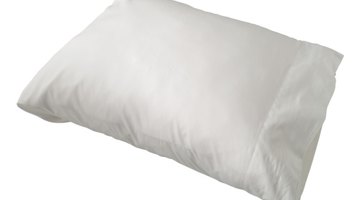
Identification: Feather Pillows
In pillows, there are many different types of feathers that can be used. All feather pillows feature the outer feathers of a bird while down pillows feather the softer, inner feathers of a bird. All feather pillows generally feature a small quill and are heavier than down feather pillows. They’re also cheaper in comparison. However, many companies today combine both outer feathers and inner feathers into their pillow to create more cost-effective products.
Feather Pillow Lifespan
All feather pillows become flatter sooner than down feather pillows because down feathers are cluster shaped rather than flat and feather shaped, which allows them to regain their shape when weight is removed. Meanwhile, all feathers do not retain their shape but instead flatten and stay flat over time. Depending on the combination of feathers within a pillow, a feather pillow can last upwards of seven years or more.
How to Increase a Pillow's Lifespan
Proper care is important for maintaining and extending the lifespan of a feather pillow. When washing or cleaning a pillow, follow the instructions as recommended by the manufacturer. When drying in a dryer, a tennis ball or dryer ball can be added to help fluff the pillows. Also, using a pillowcase and a pillow protector helps to protect the pillow from dirt, debris, oil and dead skin cells from accumulating. Avoid going to bed with wet hair as this can be damaging and can also result in the formation of mildew or mold. Aside from regular cleaning, feather pillows should be fluffed daily to maintain their shape.
Replacing the Pillow
Eventually, all pillows need to be replaced, no matter how well cared for they are. To identify a pillow that is no longer doing its job, simply fold the pillow in half. If the pillow springs back, it is still in good shape. However, if the pillow does not unfold itself, it needs to be replaced.
The Drip Cap
- Choosing the right pillow is vital for a restful night’s sleep.
- When drying in a dryer, a tennis ball or dryer ball can be added to help fluff the pillows.
- Aside from regular cleaning, feather pillows should be fluffed daily to maintain their shape.
- To identify a pillow that is no longer doing its job, simply fold the pillow in half.
- If the pillow springs back, it is still in good shape.
References
Photo Credits
- Brand X Pictures/Brand X Pictures/Getty Images
- Brand X Pictures/Brand X Pictures/Getty Images
More Articles

