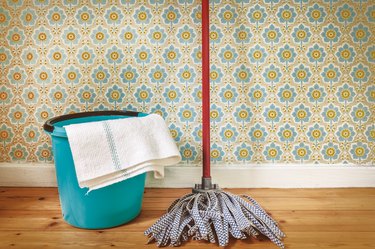
When properly cleaned, both wet and dry mops efficiently clean your floors. A neglected mop, however, spreads more dirt and germs than it picks up. Wet, sponge and dry mops all require slightly different cleaning techniques to keep them working effectively. Proper rinsing, storage and deep cleaning of your mop will give you dependable cleaning power that lasts.
Wet Mops
Video of the Day
Keep your wet mop as clean as possible by thoroughly rinsing it in hot water after every use. Continue rinsing and wringing out the mop head until the water coming out of it runs clear, then hang it outside on the clothesline to dry. You can also dry your mop indoors by hanging it upside down in a cool, dry place. Always dry your mop thoroughly before storing it to prevent bacteria buildup. If your mop head isn't removable, set the mop in the bathtub or shower to dry with the mop head up before putting it away.
Video of the Day
After every third or fourth use -- or whenever a wet mop starts to look or smell funny -- it's time to give the mop head a deep cleaning. If the head is removable, take it off the mop, and toss it in the washing machine with a cup of white vinegar. You can also opt to wash your mop head in the top rack if your dishwasher. If you do, add a cup of white vinegar instead of your usual detergent. Use the hottest water setting on your washing machine or dishwasher. If your mop head is not removable, wash it by hand in the sink with some dish detergent and hot water.
Sponge Mops
Like wet mops, sponge mops need to be rinsed thoroughly after each use. Unfortunately, sponge mops are more delicate than their fabric counterparts and don't fare well in the washing machine or dishwasher. To deep clean yours, combine 1 cup of hot water and 1 cup of vinegar. Soak the mop in the solution for 30 minutes before rinsing the mop thoroughly. Allow the mop to dry completely before putting it away, preferably drying it in the sun. Replace the head on your sponge mop every three to six months for best results.
Dry Mops
Dust mops and dry mops need care too. After every use, take the mop outside and give it a few vigorous shakes to remove dust and large dirt particles. You can also vacuum dust out of your dry mop with your vacuum's hose attachment. If a dry mop becomes very dirty, launder it by hand with mild detergent; rinse it thoroughly; squeeze out excess water, and hang it to dry. As with all mops, make sure your dust mop dries thoroughly before you store it.