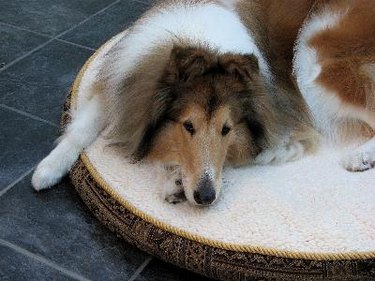
Hot spots make a dog's life miserable. Formally known as moist eczema, the bacterial skin lesions commonly called hot spots cause affected dogs to persistently scratch, lick and chew in an effort to gain relief. While the old purple standby gentian violet can provide relief, be careful -- gentian violet can stain, so wear old clothes when applying it. Although gentian violet aids in healing hot spots, always consult your veterinarian before beginning any course of treatment, as hot spots can become infected.
Hot Spots
Video of the Day
Also called summer sores, hot spots appear as round lesions in the dog's skin, growing progressively larger as the animal tries to relieve the itch with its teeth, tongue and nails. The size of the sore increases rapidly, often within hours, as the bacteria spread deeper into the skin. If you notice your dog suddenly and constantly chewing an area of the body, check for a telltale spot and take action to relieve your best friend's suffering.
Video of the Day
Gentian Violet
Available over the counter, gentian violet is an antifungal substance applied topically for treatment of skin infections. Derived from coal tar, gentian violet is also referred to as crystal violet, aniline violet, gentiaverm, hexamethylpararosaniline chloride, methylrosaniline chloride, methylvioletti and viola crystallina. Besides relieving skin infections, gentian violet serves as a yeast or thrush remedy. Because ingestion of large amounts of gentian violet could be carcinogenic, avoid letting your dog lick the hot spot after gentian violet application. Preventing licking is more easily said than done -- you may need to use an Elizabethan collar on him.
Treatment
When you see a hot spot on your dog, act quickly to prevent additional spreading. Trim or shave the hair around the hot spot, then apply a mild disinfectant such as hydrogen peroxide on the lesion. Following that, spray with gentian violet or a gentian violet compound. One advantage to using gentian violet is that the ability to see if the medication covers the entire hot spot is very easy, due to the purple color.
Prognosis
Apply the gentian violet frequently -- at least every few hours the first day and a minimum of twice daily as the lesion begins to heal. New hair growth should begin within 10 days of initiating treatment. However, if the hot spot continues to grow or the gentian violet does not provide some relief to the dog within a few days, call your veterinarian for further options. Your vet may give the dog a cortisone injection or even prescribe antibiotics if the hot spot appears infected.
Always check with your veterinarian before changing your pet’s diet, medication, or physical activity routines. This information is not a substitute for a vet’s opinion.