


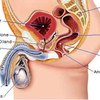


The National Cancer Institute estimates that in 2009, over 70,000 individuals will be diagnosed with bladder cancer, and over 14,000 people will die from the disease. The bladder is the organ in your lower abdomen that stores urine. This article will give an overview of the early symptoms of bladder cancer, but is not a tool for diagnosis. If you are experiencing any of these symptoms, please see your doctor for an examination. These symptoms can also be signs of an infection or stone, so it is important to be examined properly.
Risk Factors
White individuals are twice as likely to receive a diagnosis of bladder cancer than African-Americans or Hispanics, and those with a family history of the disease are at elevated risk. Once an individual has been diagnosed with bladder cancer once, he is also at higher risk to be diagnosed again with the disease. Using tobacco, male gender, and older age are also all risk factors for being diagnosed with bladder cancer.
Types
There are three categories of bladder cancer, and cancers fall into each group depending on the stage of the cancer at diagnosis. The three categories are, in order of severity: superficial cancers, muscularis propria-invasive cancers and metastatic cancers. The types of cancers in each group are different in the way they behave, the prognosis, and how they are treated.
Symptoms
The most common symptoms of bladder cancer include urine tinged with blood, pain with urination, and having the urge to urinate even though no urine is produced and the bladder is empty. These can also be symptoms of an infection, so if you do have these, it is best to see a doctor for a clinical examination.
Diagnosis
When you see the doctor, he will likely do several tests in addition to a physical exam. The physical exam may include an examination of the abdomen, rectum and pelvis. Urine tests will be ordered, to check for malignant (cancerous cells) and blood, as well as any other possible causes for symptoms, such as bacteria or infection. An intravenous pyelogram might be done. This is when the doctor puts dye into a blood vessel. The dye then binds to the urine, which helps the bladder become visible on any X-rays. Another test the doctor might do is called a cystoscopy. This is when the doctor uses a thin tube that has a light on it to see right into the bladder. He inserts the tube through the urethra to examine the bladder. This is often done under anesthesia.
Prognosis
Early bladder cancer has a high survival rate, about 85 percent. Invasive bladder cancer has a lower survival rate, and metastatic bladder cancer that has spread to other organs has a low survival rate. Only about 5 percent of individuals diagnosed with bladder cancer that has metastasized are still alive two years after diagnosis.
References
- Harrison's Manual of Oncology, Bruce Chabner, Thomas J Lynch, Jr, Dan L Longo, 2008
- Cancer Treatment Centers of America
- National Cancer Institute
Writer Bio
Jaime Herndon has been writing for health websites since 2009 and has guest-blogged on SheKnows. After graduating with a Bachelor of Arts in psychology and women's studies, she earned a Master of Science in clinical health psychology and a Master of Public Health in maternal-child health. Her interests include oncology, women's health and exercise science.