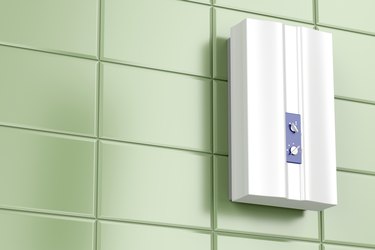
Standard hot water heaters function in conjunction with a tank: water pumped into the system is stored in the home's water tank, which the heater warms periodically so that hot water is ready when needed. A tankless water heater, also referred to as an "on demand" water heater or "instantaneous" water heater, on the other hand, work entirely without tanks. These newer hot water heaters warm water only when it is needed somewhere in the home, sending hot water along without the hassle of maintaining temperature in a large storage tank. This gives tankless heaters some distinct advantages, but these systems also have some drawbacks.
Video of the Day
Potential Energy Savings
Because tankless water heaters do not heat and store large volumes of water, they present opportunities for significant energy savings. Tankless hot water heaters use between 20 percent and 30 percent less energy than traditional hot water heaters of the same size. Depending on the amount of water used by a home, this can manifest as anywhere from a small to major reduction in energy costs. The annual savings vary depending on the cost of the natural gas, propane or electricity required to heat the water, as well.
Video of the Day
Initial Tankless Water Heater Costs
Tankless hot water heater systems do cost more than traditional systems, and installation is not for do-it-yourselfers. Tankless systems for a home of average size can cost around two to three times more than traditional water heaters, with the cost of tankless varying between $1,000 and $1,200. Because installation can require rerouting gas lines as well as adding flues and ventilation systems, installation costs can double the initial price of adding a tankless system -- and electric models can also incur extra installation costs. A family-sized unit requires thicker wires than conventional ones, as well as a dedicated circuit to serve it's short surge of usage, so will likely require rewiring. Though this means that tankless heaters may not be best for a snap decision when it comes to the task of water heater replacement, tankless heaters use a much smaller amount of space -- which can be appealing in certain homes or environmentally-focused architecture designs.
Hot Water Output
While tankless systems are referred to as instantaneous, that doesn't mean that hot water begins flowing from the tap the moment you turn it on. Rather, the system fires up the instant you demand hot water, with another caveat. Tankless systems typically do not fire when only a trickle of hot water is required. Just as with traditional hot water heaters, cold water already in the pipes must purge before hot water flows. On the other hand, you could potentially take a shower for as long as you'd like without running out of hot water because tankless systems heat the water as you use it instead of relying on a limited tank. Added demands from other activities, such as a dishwasher, laundry or another shower, all running at the same time, could tax a tankless unit.
Initial Energy Requirements
When a tankless unit first fires up, it requires a large amount of energy. While the energy demands of the system settle back down as the system continually heats water, that initial burst can strain a home's energy draw. For example, while traditional systems need about 30,000 to 50,000 British thermal units of natural gas or propane to heat water in the tank, a tankless system can consume three to four times as much energy in its initial firing. If other appliances are also requesting energy, there may not be enough fuel flowing into the house to satisfy all systems at once.