

How Thick Is R30 Ceiling Insulation?

Table of Contents
At a minimum, use R-30 insulation in the ceiling of your home. The thickness of the insulation depends on the material and insulation type. One thing is certain, your energy bills will be lower with an insulated ceiling.
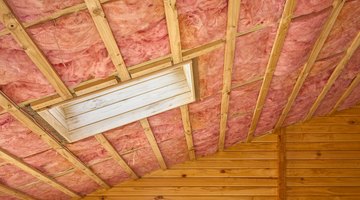
When insulating your home, it is important to consider all sides of a room, including the ceiling. R-values measure the resistance to heat flow across a material. For ceilings, R-30 insulation is the recommended minimum. Insulation types determine the thickness required.
What Does R-Value Mean and Why Does it Matter?
The R-value of insulation refers to how much a specific material resists the transfer of heat across the depth of that material. The higher the R-value, the more resistant to heat transfer the material is. This means that insulation with a high R-value will regulate the temperature of your home better than that of a material with a low R-value. As a result, your heating and cooling system do not have to work as hard to keep a sustained temperature in your home. In the end, your energy costs decrease with a higher R-value.
Fiberglass Insulation
When most people think of insulation, they picture the pink, fluffy batts that are widely available in home improvement stores. These batts come in a variety of R-values. Typically, there are only two widths, 16 inches, and 24 inches. These widths reflect the typical spacing of framing members in a wall. Some insulation comes with paper or foil and others don’t. If your insulation has any type of backing, be sure to install it on the warm side of the room, typically this is the interior side in colder climates. Typical R-30 fiberglass insulation is 10-inches-thick.
Prior to buying fiberglass insulation, it is important to measure the joint spacing you are working with. Note that the actual space between the framing members will be less than 16 or 24 inches, but the foam batts can easily be stuffed between these lengths. To cut custom sizes or lengths, simply use a sharp utility knife.
Spray Foam Insulation
Spray foam insulation typically comes in spray cans with a straw attached. This latex or polyurethane spray foam is designed to fill small gaps and cracks. It is not ideal as a stand-alone insulation, but rather is a part of an insulation system. It is ideal around doors, windows, pipe penetrations and vents.
When installing spray foam, keep in mind it expands rapidly. A little goes a long way, and if you overstuff a door or opening, it could put pressure on the frame and cause the door to no longer close. Start with small amounts. Allow the insulation to set, and trim away any excess bubbles or bulk.
Foam Board Insulation
Foam boards are rigid sheets of polystyrene or polyurethane that act as insulation. They are not common in residential construction and are more commonly seen in commercial buildings. They provide a solution to continuous insulation code requirements and are used in in conjunction with exterior cladding systems. Cutting these boards is tedious work with a hot knife. Rigid board insulation is not advised for use in residential ceiling applications. Furthermore, they do not currently make R-30 rigid insulation boards.
Blown-In Insulation
Insulation can be blown-in with a pneumatic sprayer. Typically, this type of insulation is made of fiberglass or cellulose. Cellulose insulation is actually a recycled paper fiber, making it a more sustainable insulation option. This type of insulation is great for hard-to-reach spaces such as an attic.
Not only can you install this type of insulation from the start, but you can also use blow-in insulation over existing insulation, furthering the R-value of your ceiling-insulation system. In order to achieve an R-30 value for blown-in insulation, you will need approximately 8- 1/2-inches of insulation thickness.
Warning
Insulation is a messy business. Fiberglass components can cause irritation to the eyes, respiratory system and skin. If you are working with fiberglass batts or blow-in insulation, be sure to wear long sleeves, pants, shoes, gloves, eye protection and a face mask. A tip is to cover any exposed skin in baby powder to avoid irritation. If your skin does become irritated, take a cold shower. Hot water opens your pores and allows the fiberglass to further penetrate your skin.
In order to have a well-insulated home, you need to provide insulation to your ceiling. R-30 insulation provides the minimum level of heat-transfer loss to your home. You can keep your energy bill lower with R-30 insulation on your ceilings.
References
More Articles

