How to Grow Potatoes

By eHow Home & Garden Editor
Rate: (61 Ratings)

If there were a Comfort Food Hall of Fame, the potato would be a star attraction. This much-loved tuber favors cool growing seasons, but if you choose varieties and planting times with care, you can grow spuds anywhere from USDA zone 3 south.

Instructions

Difficulty: Moderately Easy

Things You’ll Need:

Step1
Buy seed potatoes from a nursery or catalog. Started potato plants are rarely, if ever, sold in nurseries.
Step2
Choose a site that gets full sun and has light, well-drained soil that's high in phosphorus and potassium and very low in nitrogen (which encourages lush foliage growth at the expense of the tubers). If your soil is very heavy, grow your potatoes in raised beds.
Step3
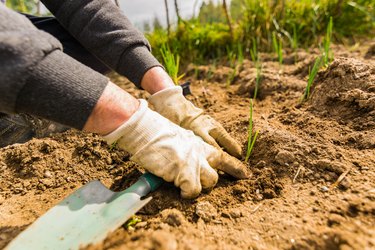
Dig the soil to a depth of at least 12 inches and remove rocks and other debris that could obstruct the tubers as they grow. Work in plenty of compost to ensure the right soil texture, but avoid adding manure, which can cause a disease called scab.
Step4
Plant potatoes in USDA zone 6 and colder two to four weeks before the last expected frost and when the soil temperature is at least 40 degrees F. In zones 7 and 8, plant anytime from early February to March, choosing varieties that will mature before the hot days of summer. Farther south, plant around the end of September for harvesting in December and January.
Step5
Plant 2-inch-diameter, "B" size (the most common) seed potatoes whole. If you get larger ones, cut them into pieces with two or three eyes each.
Step6
Use the deep-planting method for the lowest-maintenance potato patch: Simply plant the seed pieces, cut side down, 12 inches apart and 7 to 8 inches deep. The stems will work their way to the surface, along the way forming spuds on underground stems called stolons.
Step7
Use the mulching method for the easiest harvesting: Dig a shallow trench and set in the pieces, cut side down, 12 inches apart, and cover them with about 4 inches of soil. Pile a thick blanket of mulch around the stems when the plants are 6 to 8 inches tall, leaving the foliage exposed. Keep mulching as the plants grow. The potatoes will form inside the layer of mulch.
Step8
Harvest small, early potatoes as soon as seven to eight weeks after planting. Harvest the main crop about two weeks after the tops have died back and before the first hard frost.

Tips & Warnings

  • Don't bother planting potatoes from the supermarket - most are treated with a chemical to prevent them from sprouting.
  • Potatoes are classed by maturation time: early, mid and late season. If you live where summer temperatures regularly reach 85 degrees F or above, plant early-maturing and heat-resistant varieties. Good choices include 'Irish Cobbler', 'Anoka' and 'Yukon Gold'.
  • For the mulching method, dried leaves or straw also work well; so does hay if it's been cut before it set seed.
  • Potatoes can fall prey to a number of diseases and insect pests. Most affect commercial growers more than home gardeners, but to be on the safe side, buy only certified disease-free seed potatoes from a reputable nursery or catalog, and rotate your crops every year.
  • Make sure you keep potatoes well-covered. If the tubers are exposed to sunlight while they're growing, they'll develop solanine, a bitter, toxic alkaloid that imparts a greenish tinge.

Comments

| View All Comments

bmi57 said

Flag This Comment

on 6/12/2007 Great article and comments. Told me everything I was looking for. Thank you.

Anonymous

Anonymous said

Flag This Comment

on 2/12/2007 It's not really a tip, just some anecdotal evidence. While raking a few leftover leaves along a back fence this spring, I uncovered a medium-sized red potato lying on the ground (undoubtedly left there by an enterprising squirrel). When I went to pick it up, I noticed it had rooted in the ground and several plants had come up around it. I left it alone (I never even covered up the original potato) just to see what would happen. It is situated under a rather large tree, doesn't get a lot of light at all. The plants flourished until about 2-3 weeks ago (it's now June 25), and then started yellowing. After reading this very day about how the potatoes are ready to harvest when the plants start yellowing and dying back, I decided to investigate. Lo and behold! I have 3 baby potatoes! They look great, but I probably won't eat them as I have no idea where the original potato came from. But talk about easy! I'm inspired to plant some more today in a more orderly fashion. Thank for the great info and tips!

Anonymous

Anonymous said

Flag This Comment

on 5/22/2007 I always use grocery store potatoes for planting! Just to be sure they'll sprout, you can rinse them off, but I've never bothered with mine. When I buy potatoes to eat, sometimes they sprout on their own in the pantry before I get a chance to eat them. Those are sure-fire winners for planting, so I just stick them in the ground, and sure enough; they make lovely big potato plants with lots of tasty 'taters come harvest time!

Anonymous

Anonymous said

Flag This Comment

on 11/22/2005 Out of our compost comes this green plant. "What is it? I have no idea. Oh we'll just let it grow." Preparing for a garden 5 months later we unearth potatoes. Wonderfully tender! I have 5 more this year that I didn't start!

View All

Post a Comment

POST A COMMENT

Request a New How-To Article

Looking for more How To information? Chances are there’s an eHow member who knows how to do what you’re looking to do. Submit an article request now!

eHow Article:  How to Grow Potatoes

eHow Home & Garden Editor
eHow Home & Garden Editor

Category: Home & Garden

Articles: See my other articles

Related Ads

Home & Garden

Willi
Meet Willi Galloway eHow’s Home & Garden Expert.