How to Grow Blackberries and Raspberries

By eHow Home & Garden Editor
Rate: (44 Ratings)

Blackberries and raspberries are perennial plants that bear fruit on biennial canes. The roots live on indefinitely, but each year they send up canes that generally produce fruit the second season, then die. With a little TLC, the right variety will give you luscious berries for years, in any climate.

Instructions

Difficulty: Moderately Easy

Things You’ll Need:

  • Fertilizer Analyzer
  • Manure
  • Compost Makers
  • Fertilizers
  • Garden Hoses
  • Mulch
  • Plants
  • Rototillers
  • Shovels
  • Thick Leather Gardening Gloves

Step1
Choose a site that gets full sun, preferably a gently sloping hillside where the cold air drains away. Bramble fruits will tolerate some shade, but the more sun they have the more fruit they'll produce, especially in cooler climates.
Step2
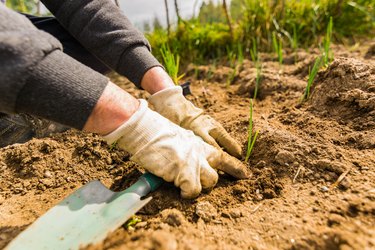
Till the planting area well (remember, this is a permanent bed) and dig in plenty of compost or well-cured manure to provide the right soil conditions: well-drained but moisture-retentive. The soil should be slightly acid; 6.0 is ideal, but plants will do fine in any pH from 5.5 to 7.0.
Step3
Buy plants from a reputable nursery or mail-order catalog, and make sure they're certified to be free of diseases and root nematodes, both of which can give your garden problems you'll never get rid of.
Step4
Plant in early spring in USDA zone 5 and north; in fall or late winter in zone 6 and south. Keep the plants moist until you can put them in the ground, then dig the holes and moisten the soil.
Step5
Set blackberries into their holes at about the same level they were in their pots; plant raspberries a few inches deeper. Place red and yellow raspberries about three feet apart, plant blackberries and black raspberries about four feet apart, and place trailing blackberries five to six feet apart. Keep rows about 10 feet apart.
Step6
Cut blackberries and red raspberries back to six inches above the ground, but cut black raspberries to ground level. After cutting back, water well.
Step7
Apply a thick organic mulch such as salt hay or compost, give plants a constant supply of moisture - especially when they're setting fruit - and top dress in early spring every year with compost or well-cured manure.
Step8
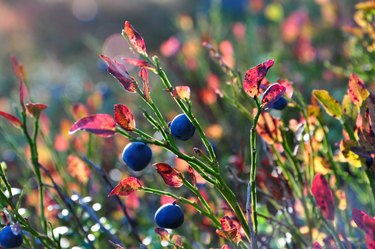
Harvest raspberries and blackberries when they're a deep shade of red, black or gold, depending on the variety. Don't tarry in getting them off the plants or the birds will beat you to it.

Tips & Warnings

  • Yellow raspberries are a special boon to the home gardener: they're even sweeter than red ones, they're rarely sold in food stores, and - for some mysterious reason - birds don't seem to care much for them.
  • Loganberries, boysenberries, wineberries and tayberries, all of which grow on trailing vines, are varieties of blackberries.
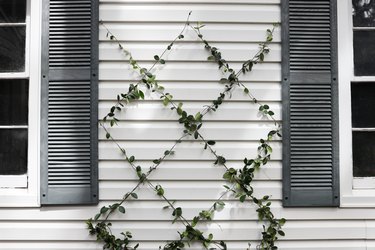
  • If you prune them steadily, raspberries and most upright blackberries can stand on their own, without support, though many gardeners grow them on trellises or between wire fencing as a matter of convenience or aesthetics. (See Related eHows for pruning instructions.) You must, however, tie trailing blackberries to a sturdy fence or trellis. You can find ideas and instructions for making berry supports in many gardening books, including the title featured in this eHow.
  • Bramble and berry canes can inflict painful wounds. Whenever you work around blackberries or raspberries, wear thick leather gloves, sturdy jeans or trousers, and a long-sleeved shirt.
  • If you plant both red and black raspberries, keep them at least 300 feet apart. The reds, though outwardly healthy, can transmit diseases to the less-resistant blacks.
  • Both aphids and Japanese beetles like blackberries and raspberries as much as they like their close relatives, roses. Ladybugs and praying mantises should keep the aphids under control, but if the population gets out of hand, a good spray from the garden hose will send them packing. To deter the beetles, plant garlic among your bramble fruits; any brave souls who show up anyway can be picked off by hand or hosed off like the aphids.

Post a Comment

POST A COMMENT

Request a New How-To Article

Looking for more How To information? Chances are there’s an eHow member who knows how to do what you’re looking to do. Submit an article request now!

eHow Article:  How to Grow Blackberries and Raspberries

eHow Home & Garden Editor
eHow Home & Garden Editor

Category: Home & Garden

Articles: See my other articles

Related Ads

Solarize Soil

How to Solarize Soil
By: eHow Home & Garden Editor


Prune Blackberries

How to Prune Blackberries
By: eHow Home & Garden Editor


Harvest and Store Raspberries

How to Harvest and Store Raspberries
By: eHow Home & Garden Editor


Harvest and Store Blackberries

How to Harvest and Store Blackberries
By: eHow Home & Garden Editor


Prune Raspberries

How to Prune Raspberries
By: eHow Home & Garden Editor


Home & Garden

Willi
Meet Willi Galloway eHow’s Home & Garden Expert.