How To

How to Small Container Garden (kitchen Herbs)

Member
By rkayne
User-Submitted Article
(23 Ratings)
Small Container Garden (kitchen Herbs)

Don't have much space and want fresh herbs? Want them to appear as appetizing as they taste? Try it this way!

Difficulty: Easy
Instructions

Things You'll Need:

  • Several Containers (size and shape depends on your space)
  • Dirt
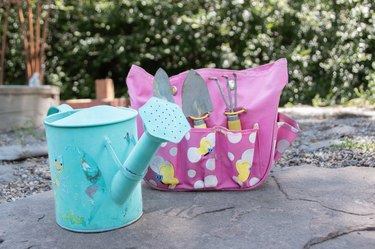
  • Watering Can
  • A free afternoon
  1. Step 1

    Decide on container shape and size, if you have the space you may consider square or round containers about 2-3 ft across (the depth can be useful, less transplanting needed later). If you have only window ledges or balcony ledges then you will want to use the window box style. Material doesn't matter, your budget does ;)

  2. Step 2

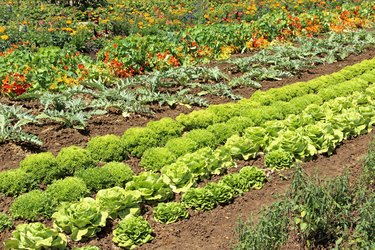
    Size is going to matter later so you want to make sure you row things according to size. I do it both by size and color so as to achieve an attractive and tasty project! I will list three categories that work well by size.

  3. Step 3

    Large, these will be your back rows. Rosemary, Sage, Basils, Fennel, Dill, Tarragon, Garlic Chives, and Chives.

  4. Step 4

    Mediums, these will be your middle rows. Cilantro, Parsley, Globe basil (habitually grows in a globe shape on a medium height stem), Caraway, Lavenders and Greek Oregano.

  5. Step 5

    Small and creeping, for your front row. Thymes, Creeping Rosemary, Creeping Oregano.

  6. Step 6

    Fennel and Dill tend to be the tallest so you may want to place these in the back and centered. Put one Dill in one pot and one Fennel in the other, back and centered. This is also has nice color and a feathery herb so it stands well as a rear centerpiece. An Upright Rosemary can be a great centerpiece as well, just make sure that is is "Upright" and be patient with it, it will be around for a long time! Make sure if you do the Upright Rosemary to not have it in or near a sage pot.

  7. Step 7

    Basil's come in greens and purples, what I like to do is put a Salad Leaf Basil on one side of the Fennel, a Purple Sage on the other. Put Garlic chives on both sides of these. If you are using a round container, wrap these around the back, if a square, straight across the back. If you are using window boxes, this should be all you put in one. The second container should have Dill in the back and centered, with a Purple Basil (or Thai Basil) on one side and Tarragon on the other. Flank the Garlic Chives same as container one.

  8. Step 8

    Choose a container and put Globe Basil or Caraway in front of your Dill then a Parsley or Cilantro in front of the Fennel.

  9. Step 9

    You should have space on the sides of the second row and space on the front row (if you are using window boxes, make row #2 and the front one box, just put the front row to the sides of the first row). In these spaces, creeping herbs look fantastic, and they have space to grow well. I would put Thyme to the sides and work a Creeping Rosemary in the front of one and Creeping Oregano in the front of the other.

  10. Step 10

    Parsley and Caraway are biennial,(live two seasons, blooming second season only). You will need to plan for them to be replaced, if you don't need parsley seed, plan to replant it next year. Dill, Basil, and Cilantro will reseed itself (annuals, flower one season then die) but most people prefer fresh starts. If you do that at least it gives you a chance to put fresh dirt in. Sage, Rosemary, Oregano, Lavender and Chives are perennials (overwinter, blooming each season once established) so these will be the permanent spots for them, unless you transplant them.

  11. Step 11

    Mints need their own pots, so if you want Mints you need separate pots. They will take over a pot quickly, but they don't have to be plain. Two ways to make a nice Mint pot. Spearmint tends to be tall, as well as Catnip (another mint) so they make great center pieces. Lavender grows well with Mints and is also a nice centerpiece. Lemon Balm is another mint. Peppermint is mid height so Lemon Balm and Peppermint would be good for sides, front or circling the taller plants.

Tips & Warnings
  • Water often.
  • Use organic fertilizers.
  • With insect problems, use organics as well.
  • Trimming promotes growth.
  • If you have a slug problem (they love Basil) try plastic lids and cheap beer. At least they pass on happy :D
  • Plant early in spring in order to get the most out of the season!
  • Do NOT place Rosemary and Sage next to each other, the Sage will most likely die. (I have never seen it live!)

Comments  

rkayne said

Flag This Comment

on 6/10/2007 Pour a little beer in the lid and leave it. Another easy thing is to get some copper stripping, I have found it in rolls that are lke tape before and run the around the container, mid way up as a slug will NOT cross copper. Make sure it is all the way around and doesn't have anything hanging over it for them to crawl up!

clintd555 said

Flag This Comment

on 2/26/2007 Please beer in lid. Snails crawl in and die.

Flag This Comment

on 1/28/2007 rkayne, can you tell me how to dry out hemp sticks to make jewlery?
Thank You
pinkfloyd632001@yahoo.com

rkayne said

Flag This Comment

on 1/17/2007 They love beer, and thusly drown. Drown=Dead. No more slugs.

Flag This Comment

on 1/2/2007 This doesnt make sense,"If you have a slug problem (they love Basil) try plastic lids and cheap beer. At least they pass on happy :D "

What do we do with this?

Post a Comment

Post a Comment
  • Have you done this? Click here to let us know.
I Did This

Related Ads

Home & Garden
Ruby Bayan,

Meet Ruby Bayan eHow's Home & Garden Expert.
Get Free Home & Garden Newsletters

Copyright © 1999-2009 eHow, Inc. Use of this web site constitutes acceptance of the eHow Terms of Use and Privacy Policy.   en-US

eHow Home and Garden
eHow_eHow Home and Garden