Construction loan rates for residential mortgages are computed differently than the rates for permanent loans. Construction loan rates are not fixed but "float" up or down during the construction period, while permanent loans are based on long-term rates.
Construction Loan Funding
Video of the Day
Construction loans are almost always funded by financial institutions such as banks and credit unions. Financial institutions consider construction loans to be short term since construction is typically completed in 12 months or less. Construction loans are also deemed to be riskier than permanent loans since many things can go wrong during construction and the financial institution might be stuck with a half-finished house. Both the short-term nature of the loans and the increased risk associated with construction loans factor into the interest rate.
Video of the Day
Amortizing vs. Non-Amortizing
When your get a 30-year or 15-year mortgage on your home, it is what is called an amortizing loan. That simply means that part of the principal is paid each month along with the interest. Each month, the balance of the loan decreases and at the end of the loan term, the loan will be completely paid off.
A non-amortizing loan means that no principal is repaid during the course of the loan, and the full balance is still in place at the end of the loan term. Such loans are also know as interest-only loans. Construction loans are interest-only loans.
Construction Loan Fund
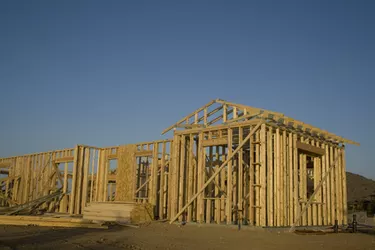
Unlike a permanent mortgage, the funds for construction loans are not disbursed at closing. Typically, the financial institution will disburse 10 percent of the loan balance at closing to cover plans, permits and other initial construction costs. The remainder of the loan balance is placed in a construction loan fund and disbursed to the borrower as each phase of the construction is completed.
Loan Balance During Construction
As the borrower, you will only have to pay interest on the amount of funds disbursed, and you will only be expected to pay the interest and none of principal. For example, if your loan amount is $200,000 and the financial institution has only disbursed 10 percent of the funds ($20,000), you will only pay interest on the $20,000. Interest is billed at the end of each month and is based on the average loan amount outstanding during the month.
Floating Rates
Construction loan interest rates "float" during the construction period. Float means that the rate will change when a specified index such as the prime rate changes. The prime rate is published in the Wall Street Journal and refers to the rate banks charge to their best customers. Construction interest rates are generally set at prime rate plus 2 percent. So if the prime rate is 2 percent, you would be charged a total of 4 percent.
If the prime rate is increased to 2.5 percent, then the rate charged on your loan would be increased to 4.5 percent for the remaining term of the loan or until the prime rate is changed again.
Permanent Loan Interest Rates
Since permanent mortgages are 15 to 30 years in duration, the interest rates for permanent mortgages are associated with the interest rates paid on long-term treasury notes. Investors who buy long-term investments require an interest rate that they deem to be rewarding for the long term. These rates are set by bidding in financial markets, and have varied over the past 20 years from 5 percent all the way up to 16 percent depending on economic conditions.
For you, as the borrower, a fixed-rate permanent mortgage means you will pay the same rate during the term of the loan, regardless of how much interest rates may change in financial markets.
The Short and the Long of It
So we see that a construction loan interest is based on short-term rates reflecting the short-term nature of construction loans, and a permanent mortgage interest rate is based on long term rates reflecting the longer term of permanent loans.