By
eHow Home & Garden Editor
Difficulty: Moderately Easy
Things You’ll Need:
Step1
Buy pumpkin plants at the nursery. Otherwise, start seeds indoors about three weeks before the last expected frost (see "How to Start Vegetable Seeds Indoors"). If your growing season is long and warm, sow seeds directly in the garden when the soil temperature has reached 60 degrees F.
Step2
Choose a site that gets full sun and has soil with a pH of 6.0 to 6.8. Pumpkins need light, very rich soil that drains well. Dig in large amounts of compost and well-cured manure to ensure the right combination.
Step3
Till your pumpkin patch deep and wide: Both roots and vines can spread as far as 15 feet in all directions.
Step4
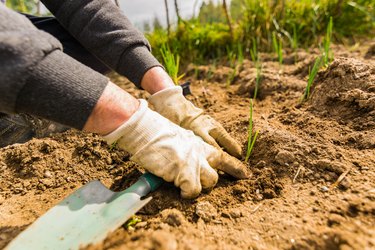
Harden off the seedlings, whether store-bought or homegrown, and transfer them to the garden when all danger of frost has passed. Plant them in hills, setting them at least as deep as they were in the pots. Spacing varies with the variety (check the seed packet), but in general allow at least 5 feet between plants in each direction. (See "How to Plant Vegetable Seeds Outdoors.")
Step5
Mulch with organic matter once plants are established to conserve moisture and deter weeds, and use cloches or floating row covers to protect young plants from chilly winds.
Step6
Make sure the plants get 1 to 2 inches of water a week, especially when they're blooming and setting fruit.
Step7
Feed plants with compost tea or seaweed extract every two to three weeks.
Step8
Pinch vines back to limit their growth once fruits appear.
Step9
Rotate pumpkins once in a while to keep them symmetrical, but take care to move them only a little at a time to avoid breaking the brittle vines.
Step10
Place boards under large pumpkins to keep them from rotting.
Step11
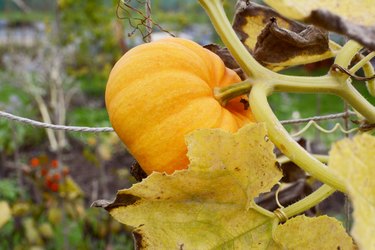
Harvest orange pumpkins after the vines have shriveled and died, but before the first hard freeze. Cut white varieties when their skins are still streaked with green (if they're allowed to ripen outdoors, their shells turn pale yellow).
Comments
Anonymous said
on 6/30/2006 When the fruit is about 6 inches across, insert an IV drip (50/50 water and sugar) into a vein 4 inches above the pumpkin. Keep on with the IV drip for 2 weeks, sit back, and watch them grow.
Anonymous said
on 11/22/2005 I use plenty of blood meal at planting time for a nitrogen kick that lasts all year. I do this because pumpkins are nitrogen lovers. Also, avoid wetting leaves when watering. Use soaker hoses.
Anonymous said
on 11/22/2005 You can grow a square pumpkin by placing a young pumpkin in a small, square-shaped box or carton. Makes for very interesting Jack-o'-lanterns for Halloween.
Anonymous said
on 11/22/2005 After Halloween has passed and your pumpkin begins to rot, toss it into your compost pile. Next year watch it grow and produce pumpkins like crazy. I put my pumpkin over the side of our front porch and it took.
Anonymous said
on 11/22/2005 When fruit is about two inches across, pinch off to one pumpkin per vine stem, or one pumpkin per plant. More plant energy will go into making that particular pumpking bigger.