
How to Pass Track Tryouts
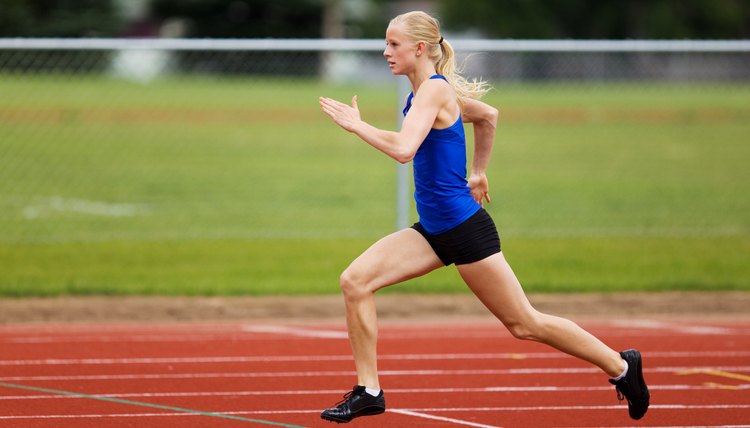
High school track and field teams often attract good athletes with limited previous competitive experience, particularly in the field events. Coaches must evaluate the newcomers to determine where they might fit on the team. The competition for team spots varies dramatically, depending on the size of the school and its tradition (or lack thereof) in the sport. Some teams will welcome all students with some ability while others will hold an intensely competitive tryout.
Identify Your Events
Assess your athletic ability and determine which events you should prepare for ahead of the tryouts. Naturally fast runners should focus on the sprints. Students with stamina could try distance running. If you have natural leaping ability, perhaps you could master the high jump or long jump. Athletes with great all-around athletic ability could compete in the hurdles or the pole vault. Big, strong athletes might have success in the throwing events. The training requirements vary from event to event, so athletes should focus on events where they have the most potential. Review the team's previous season to see the competitive standards (times, distances or heights) for each event so that you can do a self comparison.
Predict Team Needs
Assess your competition for team spots. Project which events will feature the most depth. Review the team's performance the year before and see which athletes are expected back. If possible, train for events that both suit your ability and fit an expected team need. Developing multi-event versatility will also help your chances of fitting into the team structure.
Improve Your Skills
Athletes lacking track experience can get training at a local track club, if there is one in their area. Many sports training centers will tailor a track-specific workout program for high school athletes. Plyometric drills stressing high knees, butt kicks, lunges and bounding (or power skipping) can build general fitness for track and field. Sprinters, middle-distance and distance runners should run interval sets tailored to the lengths they will run, stressing distance over speed as they build stamina. Competitors in field events should mimic the explosive movements of their event during training. Taper off your workouts as the tryouts near so you will be fresh.
Fuel Up
Have your body ready for tryout day. Drink plenty of fluids that morning, but avoid carbonated soft drinks with high sugar content. The carbonation can cause cramping and the sweeteners can cause a "sugar crash" that saps your energy in the middle of the tryout. Lemonade laden with sweeteners and energy drinks with high sugar content can also cause your performance to suffer. Water and beverages with natural fruit or vegetable juices are more beneficial. Consume something high in carbohydrates 60 to 90 minutes before the tryout. Consume some protein, if necessary, to curb hunger. Healthy snacks include cottage cheese, fig cookies, energy bars, a bagel with peanut butter or jam, dried fruits and nuts. Bring an energy bar to the tryout in case you need additional fuel.
Listen, Follow Direction, Hustle
High school coaches are looking for the best athletes at their tryouts. They are looking to fill event needs. And they are also assessing practice habits, the ability to take instruction and the willingness to learn. Attitude is a powerful tiebreaker. Attentiveness, positive body language and enthusiasm are qualities coaches appreciate.
References
Writer Bio
Jeff Gordon has been reporting and writing since 1977. His most recent work has appeared on websites such as eHow, GolfLink, Ask Men, Open Sports, Fox Sports and MSN. He has previously written for publications such as "The Sporting News" and "The Hockey News." He graduated from the University of Missouri-Columbia School of Journalism in 1979 with a bachelor's degree.