When shopping for new windows, you'll come across the terms "tempered" or "annealed," describing the glass panes. What do they mean, and which one is best for you? The difference between these two types of windows lies in how the glass is heated and cooled during the manufacturing process. Annealed glass is allowed to slowly cool to room temperature, whereas tempered glass undergoes a slightly different heat treatment and is then rapidly cooled. That basic difference in heating and cooling makes tempered glass stronger that its annealed counterpart.
However, tempered glass is not infallible: although the center is strong, the edges are weak. Tempered glass breaks if the edges suffer direct impact. You may also come across the phrase "safety glass," which is another way to describe tempered glass. It earned this moniker thanks to to the way the glass bursts into thousands of pebble-sized pieces when it breaks. On the other hand, annealed glass breaks off into large, jagged shards, which are far more likely to cause significant injuries to anyone who happens to be standing nearby. You cannot tell the difference between tempered and annealed glass by appearance alone. Both can be fashioned into all shapes, sizes, thicknesses and colors. To verify the difference, look for a seal or stamp in the corner of tempered glass.
Video of the Day
Video of the Day
Why Tempered Glass Windows Are Popular
Because tempered glass is so much stronger than annealed glass, it offers the perfect solution for homeowners with concerns about break-ins. It takes some serious effort to bust through a tempered glass window, and the resulting noise is sure to alert neighbors and homeowners alike.
But there's a far more innocent reason to justify purchasing tempered glass windows for your home: rogue baseballs. Although it seems like a scenario that only happens in the movies, accidents do happen with baseballs or other objects (including birds). With tempered glass, your window is less likely to suffer damage.
Finally, areas that are prone to high winds and hail can benefit from the extra protection of tempered glass windows. The elements might shatter an annealed glass window with relative ease, and for that reason alone, tempered glass windows are considered a wise investment.
Other Household Uses for Tempered Glass
When shopping for shower doors, it's wise to choose tempered glass versus annealed glass. Hopefully you'll never slip in the shower, but if you were to fall against the door, you'd want it to either be strong enough not to break, or to not break into dangerous shards.
Tempered glass can also be used for mirrors, patio doors and even in light bulbs or light fixtures.
When Tempered Glass Is Required
Despite the benefits of tempered glass, you may be drawn to annealed glass from a cost perspective. However, building codes require tempered glass to be used in certain situations for the safety of anyone who may fall into the glass.
The International Residential Code (IRC) dictates tempered glass to be used in certain scenarios, including:
- All doors
- Anything within two feet of the hinge side of a door
- Anything within five feet of a shower, bathtub, pool, hot tub, etc.
- Windows with a pane greater than nine square feet
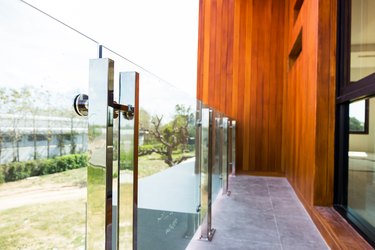
- Glass that runs alongside a stairway, ramp or landing
- Windows that are less than 18 inches from the floor
For the most up-to-date codes, see the latest copy of the IRC.
Annealed glass is more likely to be found in decorative items, including light fixtures and light bulbs or incorporated into furniture, such as table tops. Mirrors with solid backing may be made with annealed instead of tempered glass, and small windows or windows located high off the floor can also be annealed.
When making a decision between tempered or annealed glass, first ask yourself whether there is even a remote possibility of anyone falling into the glass. If the answer is yes, then choose tempered glass for extra protection.